Are lost ancient civilizations real?






December 09, 2025
Inside the ‘Impossible’ Deal That Averted an Environmental Disaster in Yemen
S5
E2
35 MINS
The FSO Safer, a ship that had been used for decades to store oil in the Red Sea off the coast of Yemen, began falling into disrepair after it was abandoned at the outset of Yemen’s civil war in 2014. The vessel was in Houthi controlled territory, which made it impossible for the UN to facilitate inspections or repairs. By 2020, there was growing alarm that the ship would break apart, spilling more than a million barrels of oil in the sea and setting off an environmental and humanitarian disaster.
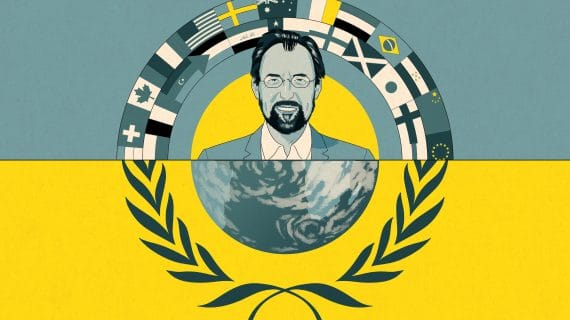
This episode features David Gressly, former UN resident coordinator and humanitarian coordinator for Yemen, who negotiated with Houthi leaders and the Yemen government to allow the transfer of oil to another vessel. David also led the fundraising effort and supervised the transfer of oil in 2023. But the job is not yet done. Plans to tow and scrap the ship have been delayed due to renewed political tensions.


Full Transcript
Welcome back to the Negotiators. A production of Foreign Policy and Doha Debates. Hello, I’m Femi Oke.
I want to take you back to late March, 2022. At the time, I was working for Al Jazeera.
Femi on Al Jazeera: Hi I’m Femi Oke. You’re watching the Stream. Saturday was the anniversary, the seventh anniversary of the Civil War in Yemen beginning.
The political landscape in Yemen in 2022 was pretty similar to where it stands today. Houthi forces held Sanaa and many of the populated areas of the country, while the Yemen government still controlled the majority of the land – and the oil fields in the country’s east.
But the point of our conversation that day wasn’t about the state of the war. It was about Yemen’s humanitarian crisis – one that was being largely ignored as the world focused on Ukraine. One of my guests was the UN Humanitarian Coordinator for Yemen – a man named David Gressly.
Femi on Al Jazeera: David, you know these figures, you are very aware of what is happening. How do you solve that issue ?
David on Al Jazeera: Well, there’s, there’s three, three major problems. (Mm-hmm) I mean, we have to start with the conflict itself. (fades under)
David Gressly was a very busy man with a huge job to do.
David [00:01:00] My primary role was really to coordinate the humanitarian delivery of assistance to people that were suffering as a cause of, because of the Civil War. Over 13 million people needed assistance at that time.
But for a while, he had been warning his bosses back in New York about another problem that wasn’t getting enough attention – an aging oil tanker called the FSO Safer, filled with more than one million barrels of oil.
The oil was largely owned by the Yemen government, but the port where the Safer was positioned was controlled by the rebel Houthis. And that was a problem. Because maintenance on the tanker had stopped at the start of the war, and now the Safer was in danger of sinking, spilling more than a million barrels of oil in the Red Sea.
Not long after our interview, David got a call in the middle of the night from his bosses at the UN.
I’ll let David pick up the story from there.
David [00:00:31] It was fairly typical when I get these kinds of assignments, that the call comes late at night, which I think is about close of business in New York, and very late in the night for me sitting in Yemen. So I got a call saying, hey David, you’ve been concerned about this, and you really have always said that it should be somebody on the ground managing this, and we all have decided that you’re right. So we’ve chosen you to do just that.
But anyway, they asked very politely and I said, well, if you want me to do it, I will do my best to see what we can do to solve this particular problem.
David [00:01:25] Old vessels are used for this purpose around the world, so it’s nothing unusual. And it was in pretty good shape when the war started, but the war lasted over eight years. And over that period of time with no maintenance, it started to decay substantially. And there was a great deal of concern that the vessel might sink, which would have been a real tragedy because it contained over a million barrels of oil. And for reference, that’s about four times the oil that was spilled. In the Exxon Valdez accident many years ago, so it had been four times the magnitude.
David [00:02:01] This tanker was anchored just offshore from the port of Hodeidah. It would have, first of all, blocked the port of Hudeda, which was a primary entry port for humanitarian assistance in particular, but imports in general. It would’ve potentially, depending on the time of year that it happened, It potentially could have blocked other ports in the Red Sea, including at Djibouti, all the way down to Somalia, and potentially could have made passage through the Red sea itself difficult. We saw estimates of over 200,000 fishing families would have been affected. Basically no livelihood. The ecological problem would have been equally catastrophic. The Red sea is a, is a gem with, you know, beautiful coral reefs and pristine waters that would have polluted that for the next generation basically. The problem was of course is that it was in HouthiHuthi controlled waters where nobody had access to actually assess it so it was very difficult to determine just exactly what the state was but there were some periodic reports coming out that indicated that it was in serious danger. In fact it almost went down a couple of times. So it was just, it was like a very aging vessel where one thing after another just started to fall apart. And it was a real problem, potential problem for not only the Houthi controlled areas, but also the government controlled areas.
David [00:03:35] And the Houthis control even, including today, probably 70% of the population, maybe not in terms of geographical coverage, but in terms of the populated areas, they control about 70% the population. So they have significant control over the country, and they control the capital as and the ministries and the armed forces, the Coast Guard, et cetera. From their point of view, the fact that they controlled most of the population and the capital, from their point of view they felt that they were the actual government. That made for very delicate kinds of relationships. It was, you couldn’t really work with them as you would a diplomatic entity to a government fully, but you kind of had to mimic it to a certain degree. That was acceptable internationally as well. That’s why it kind of fell to us in the United Nations. We were the only international presence on the ground, really. There were no embassies that were functioning and so forth. So it was either us or no one, frankly. Either we were able to do it or it wouldn’t be done.
David [00:05:04] There was a concern that people on the ground might be at risk from a Houthis. If they were directly involved. But I had a pretty good working relationship with them, so I was not really worried about that at all. In fact, when I consulted some of them and the leadership, those that I trusted, one of them told me, don’t take it, don’t do it. I said, why not? Don’t you want it? You’ll absolutely want it, but we also don’t want you to fail. And this is likely to end in failure. Ultimately, they were worried that I had… Credibility with the de facto authorities, the Houthis, and they were concerned that a failure on that front would damage that relationship and my ability to continue to successfully deliver humanitarian assistance in the areas under Houthi control. But it was sort of symptomatic of a larger problem that I faced is that nobody thought this operation was possible. Not the legitimate government, not the major countries involved in the region in the conflict. Almost every ambassador I spoke to thought it was destined for failure. So one of my key challenges was keeping enough hope alive so that we could get the consensus to get the operation underway to finance it, which was a major task, and to maintain the confidence of all parties as we implemented it. Not to block the progress going forward. So there’s many dimensions to trying to find a solution to go forward on this.
David [00:06:47] We looked at the possibility of getting the oil sold and both parties, the government and the Houthis had told us privately that was possible. Who gets the money is the key question. Most of the oil, about 90% was really owned by non-private entities. So it was basically the government of Yemen Oil. You really needed to get both the agreement of the government. And of the Houthis to have the oil sold. Who gets the money is the key question. It’s a million barrels of oil. And you can do the math if oil is in the $70 to $100 range, which is what it was during that period. That’s a lot of money. And our concern was that there was not enough time necessarily for those negotiations to go forward. So better to secure the oil and create space for those negotiations. In the end, the agreed approach was to bring in an alternate vessel and offload the oil there. And then by the time required to see what to do with the oil itself.
David [00:07:56] The first stop was really to meet with the person who is in charge of actually the central bank. Of course, this is the de facto Houthi central bank, I have to be very, very precise here. And we had a good discussion, initial discussion, they sketched out what they thought would work and what their, but also what their fears were. At the time that this operation was being planned and carried out, there effectively was a ceasefire in the country and an active peace negotiations underway and the Houthis themselves felt that that the Safer operation could demonstrate some level of goodwill towards a longer-term peace. So we had that window basically of a ceasefire and some willingness to try to see how to make things advance a little bit.
David [00:08:50] The normal structure of the discussions were meeting at probably a neutral place because they had to be careful. Because an air war had been going on. It wasn’t going on during the prime period of our work, but certainly initially. So they had to be careful where they were. So they liked to meet in a nice neutral spot. And I usually advised our Saudi counterparts where we were, just so that, you know, by the way, I’m here. So don’t, if you don’t mind, don’t drop any ordinance on us tonight type of thing. And the way it works is you come in, You have. Some time to drink tea, some light conversation, and then you move to eat an extended lunch where a large number of people may be there and it’s usually quite a bit of food. You are not expected and not wanted really to talk about business there. That’s about eating and showing hospitality and you know you can have good conversation about different things you know we talked about where the best honey in the country comes from where the varieties of apples were and you know a lot of food centric things and now and then general customs and so forth. When that was done then you would move to a private room to start actual discussions and typically both parties it typically became a cot session chewing cot which I don’t chew but um I was frequently encouraged to do so and and this could go on for hours after that. And even after we concluded whatever discussion was going on, it did go on for hours afterwards.
David [00:10:35] It’s very, very important in these kinds of situations to work equally with both parties. So if you have a conversation in place A, you really need to go to place B and be totally transparent. About what those discussions were with both parties. So that they recognize that you’re not trying to trick them or convince them to do something that really represents the interests of the other side. We had UN aircraft that moved people in and out because there was no commercial flights into Sana’a at that time. And we had flights from Sana’at to Aden several times a week. So you just had to hop on a plane, basically. So. It was not hard to do that. It was just like shuttle diplomacy, basically, flying back and forth. That’s assuming the government was actually in Aden because it had been largely headquartered in Riyadh for many years. And they were making attempts to come back to Aden from time to time. But typically the prime minister was there and I could usually meet with him. The prime minister was straightforward. He, you know, he was a very good person and legitimately wanted to see this thing done. So working with him was actually very, very pleasurable. The problem was it was a government that was constituted of various factions and those factions had their internal issues, including with the prime minister. So it wasn’t just one point of decision-making basically and the prime Minister was very useful and helping work that through too.
David [00:12:16] So it was a different issue, basically, than with the Houthis, who were very, very cohesive. There were the frontline people that we dealt with, but they clearly reported back to senior leadership among the HouthisHuthis as to what was acceptable and what was not. And they had their marching orders. And yeah, so it was the difference between a very cohesive, hard negotiating type to a sympathetic, but somewhat fractured. Government on the other side that made the style had to be a bit different for both.
David [00:12:53] Actually getting agreement on the principles of what to do was not so difficult. The Dutch and the British had tried to work some potential solutions through and actually had gotten on the ground to have some discussions in Sana’a with the Houthis on this. And that’s where the initial development of an alternate vessel coming in actually came from. And I think that’s why the initial discussion I had with the Houthis went reasonably well, because they already had it in their head.
David [00:13:28] Next step was to do an operational plan so that we could find out A, what it might cost. And secondly, just what the various steps would be and make sure everybody was comfortable with that. And by now the everybody’s not just the two parties, but it’s the potential donors. It’s our UN headquarters. It’s other parties in the region, particularly Saudi Arabia, particularly the US government, the UK government, and the Dutch government played a major role. Then we needed to move to a more formal stage and getting something signed in Sana’a is generally quite difficult. It’s usually verbal and getting things in writing is not always so easy.
David [00:14:18] So we, we spent one night discussing this with various representatives of the Houthi leadership. In the end, we were able to hammer out a very short agreement that what we would do is secure a replacement vessel, basically to offload the oil. And then we would then remove the old vessel and We didn’t commit to actually doing it. We said we would make a good faith attempt to raise the money, because I didn’t want to create the perception that this was a guarantee, because I don’t have even a dollar at that point in time. I went home around midnight, I think, after those discussions. And when I got home, I got a call from Saudi Arabia. I hadn’t even, I was just trying to get into bed, go to sleep. And it turns out the Houthis had tweeted the whole agreement out to the world. So they wanted to know what it was all about. Okay. After getting a good night’s sleep, I was able to go back and start working out some of the details on that. The government was okay with it. They had been okay with the concept anyway, so that was not a surprise. And it was written in such a general way that It wasn’t really controversial in that sense, but it gave me what I needed as a basis to go forward because there’s a tremendous suspicion among the international community that the Houthis were not serious, that they had no interest in this. It was just their way of delaying tactics and so forth. So that agreement actually helped counter that argument and started to give legitimacy to the program. Most importantly, we realized the next step was basically to get the funding. That took a year and a half. That was the hardest part really. And for reasons I easily understood, but it was still frustrating.
You’re listening to The Negotiators. On each episode we look at one dramatic negotiation — through the lens of one of the participants. More after the break.
BREAK !
David Gressly had a plan to transfer more than 1 million barrels of oil off the aging FSO Safer and avoid an environmental and humanitarian disaster that would cost an estimated $20 billion dollars to clean up. And he had the agreement of the government of Yemen and the Houthis, which is something no one thought he’d be able to do. Now, all he needed was $140 million dollars. That was the estimate for how much it would cost to move the oil to a newer tanker and remove the Safer from Yemen waters.
Here’s David.
David [00:16:28] I had been at that point giving a lot of briefings to diplomatic community because they like to be briefed on these things. So we had a video conference with some key ambassadors that might potentially donate to this. But for them, this was another briefing and they wanted to know about the agreement and so forth. And so I briefed them about that. But I concluded, I said, now I’m not here just to brief you. I’m here. To say I need this money and you guys are going to have to help me get it so I’m not doing any more briefings just for briefing sake. It’s time for all of us to start to work together to get this.
David [00:17:14] The Dutch offered to organize a pledging event in the Hague so we went through that and we got some initial pledges. Obviously the Dutch put major amount of money up and other governments also made some. Initial pledges. But I think the total we had at that point in time almost reached 40 million. And I said, well, maybe we should look at it differently. Maybe we should just look at this as the first round of fundraising and that we have enough money to start work on getting the technical specifications. We can start looking at maybe contracting the salvage company. There’s many things that we can do with the funding that we already. You know, I think if I were you, I’d just declare it a success as an initial response and that more work will, will be done. And so they, they, there were still depressed, but I think they agreed that that was the right way to go forward.
David [00:18:11] So we organized another fundraising in September in the shadow of the heads of states visits to New York. You know they get together in September of every year. And we use that as a way to celebrate the work to date. We had raised additional money by that time because money did continue to come through. We found different ways, including the private sector. One of the things we did was do a crowdfunding exercise. And I knew from the beginning that we would never raise millions of dollars through that, but I wanted to raise public attention through that. And it worked because we got it. Dozens of calls from journalists asking us, why does the UN have to do crowdfunding? Have you ever done this before? And I said, not to my knowledge, but I said we’re trying every angle to get funding. And so a lot of articles came out and said, shame on you, international community. They’re having to do a crowdfunding. Why don’t you step up? And so suddenly governments that had been reluctant did step forward.
David [00:19:21] I’m trying to remember the exact amount we had by September, it was in the 70 million range. At that point, we thought we had enough to contract the salvage company and potentially start the work while raising the final amount to get the vessel. And after giving it some thought, I realized we’re doing this backwards. People need to know that we’re seriously gonna do this thing. And so I recommended that we shift to buying the vessel and that once the vessel was in hand and then moving towards the Red Sea, then we would probably get the rest of the money required to contract the salvage company. And that’s exactly what we did. And that thing started moving towards the Red sea and everybody’s going, is this real? There was still this really huge disbelief that the Houthis would ever allow this to happen. And the Huthis didn’t believe we’d ever raise all the money. So the doubts were different, but the doubts were there.
David [00:20:21] Getting the vessel changed the dynamic considerably. Because suddenly there’s a real vessel, it’s really sailing, it’s going to Djibouti. So then we could talk about, we really gotta get the salvage vessel down there. Suddenly everybody said, all right. So we did a couple more pushes with donors and more money came in and we had enough in the end to get the, salvage. Vessel going down there so that we could actually do the work. And then now this shifted the whole thing from fundraising to… Not the operation itself, because the operation was straightforward, technically.
David [00:21:02] The problem was now issues of ownership, of optics, where should the ship go, should it go to Aden, should go to Djibouti, everybody had their opinions and they were excited that the vessel was there, but both parties wanted to claim ownership. The thing was hanging by a thread at that point in time.
David What we needed to maintain was the status quo, which is ownership by one party, the government, and the control by the other party, The Houthis. We also had a problem on the naming of the vessel. Both sides had ideas of how to name it that were provocative to the other side. So I won’t go into the details, but I said, I think really this is, you know, We’re having peace talks and, you know, we’re going to hopefully have a peace agreement and unity. Maybe we should name it something, you know, it’s symbolic of the future. Something about peace or unity or something. Actually in Sanaa, they came up with the thought of Yemen. Let’s just call it the Yemen. And, and so we were able to move ahead. That was, that took, you know, that was several days work just to get the name. I had to fly to Riyadh for that in the end. And it’s the only reason the whole operation succeeded anyway, is that everybody knew this was an environmental disaster that was gonna hurt everybody. So that was the only thing that held it together. And it’s just constantly going back to that point. It’s like, everything is here, you know, let’s let pettiness aside and let’s get this thing in.
David [00:22:45] From the beginning, the CEO of the salvage company of Voskalis, the core concern they had was whether or not the crew would be secure. And so here I met a couple of times just outside of Amsterdam at their company headquarters. And he said, look, I trust you. And I don’t want to make a decision to go or no go until it’s time to go. And you and I will talk. And if you give me the green light, we will do it. And he explained that his concern was that their company had a bad experience in Iran at one point where their crew was taken, detained for about nine months, I think, on three vessels. And they really didn’t wanna repeat of that. And they were afraid that this might happen here. I said, I don’t think it’s likely, but I’m not gonna completely discount that your fears on this.
David [00:23:44] So I flew to Djibouti when the salvage vessel showed up and went with the crew into Hodeida, because I felt that that was important that they saw me there. I mean, we talked a bit about what, what to expect and how to react to likely situations and so forth. And being a Dutch company and the Dutch recognized that they’re very industry as soon. Task-oriented and time-oriented, time-conscious, and so forth. Well, that came right up against a hyper-security-conscious revolutionary group, I guess you would say. And that’s not an easy relationship to maintain.
David [00:24:29] So the initial work was not too bad, which is basically preparing the FSO software for the offloading of the oil. And I didn’t have to be there really full-time for that period, because we were still actually raising money and we were working on other issues. I had a real job. This is not my day job. I had real job to do as well. The real problem came at the moment of truth, so to speak, which was moving the oil off into the Yemen. The Houthis understood that their leverage for getting what they wanted out of this arrangement. Kind of declined significantly once the oil is off, because everybody could just walk away and say we’ve done it. That was a real concern at that point in time.
David [00:25:15] We were constantly monitored by drones overhead, divers under the vessel, government agents or Houthi agents, I should say, on board the vessel monitoring our every move, and any one of them could just put the whole operation to a stop. Just because they saw something they didn’t like or didn’t understand. So maintaining the relationship between the crew and the Huthy agents on the ground was a challenge. And because they just wanted to get in, we can get it done, we can do this. Just get out of our way. And as soon as you say, get out your way, that’s a problem. Or if you start arguing, it’s a program. It’s like, nope, we’re gonna have to stop, we’re going to have to. Let’s not escalate this until we have a chance to de-escalate this and move forward. But it cost us a quarter of a million dollars a day. So every time somebody complained about something they didn’t understand, that was a quarter million dollars down the drain and money was tight. And I was on board as these operations went on. Then I would often have to drive back to a Sanaa because something had come up. I would have to spend two or three days. Explaining why and why they shouldn’t stop the operation and so forth. So it was continuous negotiation that really accelerated during the operation itself in order to keep it on track.
David [00:26:40] But when it was done, it was like a relief for everybody, frankly. They had been putting maximum pressure on us the whole time, and then suddenly they went. That all disappeared. We’re all brothers again or something, you know, it was it was very interesting dynamic how quickly that changed. We had completed the work and you can imagine the crew just wanted to get out of there after all that they’ve been through because for them it felt like you know serious harassment the whole time and you know they were very very angry at how they were were treated.
David [00:27:20] But then the last day a whole delegation came out the governor came out. Bearing gifts for every crew member. And they wanted to thank them. They said, you know, you have to forgive us for all of this and that. We want you to come back. You’re our heroes for getting this done, et cetera. And they all got their gifts and so forth. And the crew was like shocked. And they’re going, in 30 years, no one has ever come out to thank us for something. And it’s typical Arab hospitality, I really think came through. You know, it’s tough and tough until you. Everything is done and then you know then we’re all back to normal again. That was I guess the day before we left and then the day we left there was just some final negotiations of what equipment to leave behind. They’re always negotiating up until the Yeah, all right, take it. I just went out of here. Anyway, so the last day we, we had our final goodbyes and everybody was cheerful and all the intelligence officers were waving at us as we pulled away and big smiles and, and, you know, everything was wonderful, but nonetheless, I wasn’t happy about the situation until everybody got safely out of the, out of the port and in international waters and they were equally relieved.
David [00:28:50] All we’ve done is buy time, a lot of time, but not infinite time. Unfortunately with the Gaza conflict that started just after our operation to transfer the oil changed things dramatically because as you know, the Houthis became actively involved in the Red Sea and attacks on Israel and on shipping in the red sea. That kind of closed the window. We would not have been able to do the operation under those conditions. So we were fortunate to get the oil off before that. And I certainly hope we find a solution to it before this vessel starts to decay.
David: [NEW] Our costs actually was pretty, pretty much on target. We estimated 140 million. In the end we spent about 120 million and really needed about 20 million to finish the job.
David [00:29:41] After the salvage operation was complete, there was still some residual oil that needed to be flushed out. Not too much, but there needs to be a salvage company going in to detach it at a minimum anyway. It can’t sail on its own, and it’s really heavily anchored into the pipeline.
What you would see if you came in from above is the Safer located where it always has been attached to the pipeline. The only difference would be that it’s floating much higher now. Then nearby anchored would be the Yemen, which has a million barrels of oil on it right now. Is fully capable of leaving Hodeida to transport the oil and the oil could be sold. So that part is now very simple in practice, but it needs to wait for a diplomatic window where those negotiations are possible.
David [00:30:25] I do think there is a solution for which is to put that funding into an internationally supervised fund. That benefits Yemeni people who’ve suffered during the war, I think both sides could agree to something along that line. Neither side wants the other to benefit in any military security way from that funding. So these protections would have to be built in in order to find a way forward. It’s still worth a lot of money. If somebody could figure out how to get it out, it could really benefit people in Yemen. Unfortunately, with the conflict in Gaza and the Houthi entrance into that, everything basically came to a halt. There’s no negotiations on selling the oil. And I honestly, unless the fighting truly stops in Gaza, we can hope that that’s what’s going to happen now. I don’t see that dynamic changing on the ground, but if it does, there’s still an opportunity to finish this job.
David Gressly retired from his position at the UN shortly after the end of the initial salvage operation. He is now the executive director of the Friends of the Verde River, a nonprofit conservation group based in Central Arizona.
CREDITS
Next time on the show… Security Council resolutions are difficult to negotiate – especially when they deal with Israel and Palestine. But in late 2023, Vanessa Frazier, the UN representative from Malta, did something representatives from larger, more powerful nations had struggled to do. She negotiated a resolution calling for a humanitarian pause to the war in Gaza.
Vanessa: Everybody said the same thing. We cannot see any more babies being pulled out of the rubble. They have not enlisted. They’re not wearing uniforms, they’re not carrying arms. They are innocent.
That’s next week, on The Negotiators.




Our other podcasts
Doha Debates Podcast
Doha Debates Podcast brings together people with starkly different opinions for an in-depth, human conversation that tries to find common ground.

Lana
A podcast in Arabic for today’s generation to discuss their outlook on the world, hosted by Rawaa Augé.

Necessary Tomorrows
Mixing speculative fiction and documentary, leading sci-fi authors bring us three futures that seem like fantasy. We meet the writers who dream of these futures and the activists, scientists and thinkers who are turning fiction into fact.