Football fandom: Community or commodity?









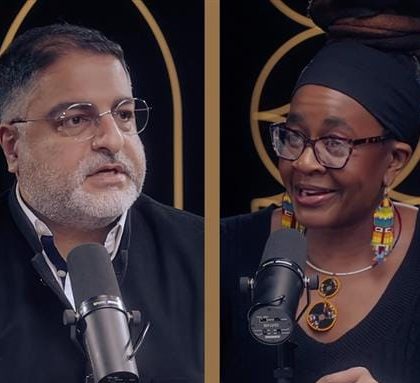
Last week, we heard about a negotiation at the U.N. Security Council that led to a brief pause in the fighting between Israel and Hamas in November 2023. As part of the pause in the fighting, Israel and Hamas agreed to exchange captives. Israeli American hostage negotiator Mickey Bergman takes us inside the complicated set of negotiations that led to that exchange.
We also hear about the negotiations that finally ended the war this October. Majed al-Ansari is a spokesperson for Qatar’s Ministry of Foreign Affairs—one of the countries involved in brokering the cease-fire. He’ll talk about how the pieces finally came together.
The Negotiators is a podcast from Doha Debates and Foreign Policy—and a special partner this season, the International Peace Institute.


Full Transcript
Bergman and Ansari:
Welcome back to the Negotiators. A production of Doha Debates and Foreign Policy. Hello, I’m Femi Oke.
Last week we heard about a negotiation at the U.N. Security Council that led to a brief pause in the fighting between Israel and Hamas in November, 2023—about a month after the war in Gaza got underway.
It would take almost another two years for the two sides to stop fighting. Later in the show, we’ll hear about the negotiations that finally ended the war in October of this year. Majed al-Ansari is a spokesman for the foreign ministry of Qatar—one of the countries involved in brokering the ceasefire. He’ll talk about how the pieces finally came together.
But first, let’s go back to 2023 and that U.N. Security Council resolution. After it was passed, and as part of the pause in the fighting, Israel and Hamas agreed to exchange captives. Hamas released 105 hostages it had taken during its attack on Israel on October 7. And Israel freed some 240 Palestinian prisoners.
The exchange itself involved a complicated set of negotiations—with mediators shuttling back and forth between Israel and Hamas. Mickey Bergman is an Israeli-American hostage negotiator. He’s been on the show before, describing various negotiations. In 2023, he represented families of some of the Israeli hostages. He spent time in Doha and Cairo, carrying proposals back and forth between the sides and conducting other mediation that helped cement the deal.
Mickey is the CEO of a U.S. organization called Global Reach that helps bring home Americans who are wrongfully imprisoned abroad. The families of Israeli hostages heard about his work by word of mouth and reached out to him on October 7.
Speaker 1 [00:00:00] So the time I started hearing from families of hostages was within hours after the news came in about the attack and it started escalating really quickly. And these were phone calls, WhatsApp messages, emails, the SMS texts. Within about a week, we had 67 families. So it was a really large number and more than we can actually process individually. But since we realized that the solution is not individual, it’s collective. Most of them, it’s not a matter of the individual cases, but it is about how we actually get to a resolution. And it’s not the only time that more than 200 hostages have been taken. We’ve had the cases like that in Nigeria and and and elsewhere, but it is the first time that I’m aware that we have this kind of crisis and a war is about to start. Not only do you need to kind of figure out how to solve it, but you need to do it within the context of a war is about to erupt. And I did what we always do is sit down, talk to colleagues, and try to come up with what we call the theory of return. That’s in our business the term, and that is the pathway, the the script, the story, the shortest way we can figure out how a hostage comes home. With this, we had a few assumptions that we based on. Number one. Israel and Hamas don’t talk to each other. And even in this environment, we knew that proximity talks are off too. So you know from that assumption that it this has to be mediated. It can’t be direct negotiations or anything close to it. The second assumption that we had is that there are four governments in the region that can influence Hamas. And it’s important distinction. None of them can control Hamas. It’s a large misunderstanding in the world. Nobody can control Hamas. Hamas is a proud, independent Palestinian program. Yes, it’s an arm and an offshoot of the Muslim Brotherhood, but it is independent. But there’s still four governments that can influence them. And these are Turkey, Iran, Qatar, and Egypt. And if you think about those four, none of them have any interest in helping Israel. Just the geopolitics of it. However, two of these governments, Egypt and Qatar, certainly have interests in helping the United States. These were the assumptions. And from here, the theory of return that we created for this very quickly, and I’m talking this is like October 8th, 9th. The theory of return was we needed to make this. As much as possible, an American story, an American priority to create as many links as possible between the hostages and the Americans, whether they’re American citizens, whether they’re related to American citizens, whether they’re green card holders, whether there were even students in the past that studied here and went back to Israel. Because when the mediators, Egypt and Qatar, sees that this is an American priority, they now have an interest to use their leverage and their contacts and go to Hamas and say, look, you might have a fight with Israel, but we need a solution on this humanitarian issue on the hostages. And that’s the theory of return that we had. I believe it was within five days, President Biden met with families of those who were hostages, American hostages. And I remember trying to explain to these families how significant that is. Because as I told him, at that time we had families of hostages and political prisoners that were held five, seven, eleven years never to have received a call from the White House. And now they have the president on a Zoom. So it’s there’s images from it, there’s publicity around it. And while he was meeting with the American families. Clearly, this was not about an American deal. It was just making sure that there is a deal for everybody else. So the first part of our theory of return was actually relatively easy to do. As I mentioned, we we knew that there were two governments that were relevant as mediators on this, Egypt and and Qatar. I have a relationship with the Qataris over years. I’ve never worked with them on anything that related to Israel-Palestine, but I worked with them on Afghanistan, worked with them on Iran, worked with them on Russia, worked with them on Venezuela. So we know we we know each other very well. And we were communicating very closely on this with the Qatari channel. They understood very quickly that this is an American story. And they did something that I didn’t expect. When they went to Hamas to do the solicitation of a deal, they didn’t just ask for a deal. They said we need a proof of concept. We need to prove to the Americans that this channel works, that our relationship can be effective to bring back people. And Hamas released two women, two American women from the Chicago area. Nothing in return. Israel was not involved in this. The Israelis were notified a couple of hours before, and they did what they didn’t do in order to make sure it happens. The Egyptians, not to be beat by the Qataris, did the same thing with their channels and released two elderly women. So we Before this even started, four hostages came home with no cost, just because the mediators were trying to prove to the Americans that they’re valuable. Once the Qataris and then the Egyptians were able to get the two hostages each released, there was a proposal on the table that came from Hamas solicited by the Qataris. A solution for all of the hostages under the commitment that there will be no invasion. And all of the hostages that were taken on October seventh in return for all the Palestinians held in Israeli prisons. Eight thousand, nine thousand Palestinians being held Israeli prisons will be released when the last hostage comes home. So my role was be like whatever it is, we need to get it done, we need to get it going because there’s only two cardinal truths about the world of hostage and political prisoners negotiations. And the first one is that the deals never get better with time. They simply don’t. We make up stories, spins, political spins, to make them seem that they do, but they never do. If we’re lucky, they stay the same. If if we’re not lucky, they get worse. And number two is that time is the biggest enemy for the hostages themselves. I try to argue and advocate in saying like hold off in invading. Solve the hostage problem first, then figure out what you want to do as a country. And I think Israel had Hamas on the if they pursued that, it would have had them on the back heels. Didn’t win that argument, obviously. I understand why, by the way. It’s a there was so much trauma that this attack was so grandiose and so successful from Hamas perspective on this, that there was vengeance to be made. And there was just n not enough oxygen in people’s brains to think, you know. Unfortunately, I understand it when it happens to people, but you want leaders to have that oxygen and that l ability to do it didn’t exist. If you look at a van diagram as a negotiator or as a mediator, I should say, and if what Hamas wants doesn’t there’s no overlap whatsoever between what Israel is willing to give, you’re going to fail at trying to get that done. But if you break it into pieces and into steps and small steps, you can get to the overlap. It’s going to be a very sliver little sliver of overlap, but that’s what you’re going for. And that’s that existed. So I I flew to Israel, it was very early November, if I remember correctly. And I spent a couple of weeks just meeting with families. I was very honest about the theory of return. And in every meeting like that, I sat and I listened to their stories because I needed to hear about the hostage. I needed to hear the survival stories of a lot of them because a lot of them it’s just not it’s not like oh my family members taken like they were there when that took place and they survived. And the stories were devastating. I had to take those stories and bury them so deeply inside of me, because if they stayed in my brain, if they stayed in my throat, I would not be able to function. It was kind of like I had to force denial in order to be able to do it, and and listening to them and talking to them, and then explaining to them how I see a solution and always trying to distinguish between how I feel about it and what objectively I see as the shortest way to get their loved ones home. So often I found myself saying, This is not about revenge. Right now it’s about saving lives. And for that we need to do what we need to do.
HOST: I want to break into the story here, just for a moment, to set the scene. Mickey Bergman is in Israel, meeting with family members of hostages held in Gaza. While those meetings are underway, Israel announces it will agree to a five-day pause in the fighting and allow humanitarian aid into Gaza—in exchange for the release of some hostages. This is the “humanitarian pause” we heard about last week from Malta’s Vanessa Frazier. On each day of the “pause,” Hamas would release 10 Israelis hostages and Israel would free dozens of Palestinians from Israeli jails. If the exchange goes well, the two sides could extend the truce. But the details of the agreement still had to be finalized.
Let’s get back to Mickey’s story.
MICKEY: Within that same day, that night I flew to Doha. Because at that point the center of gravity shifted from Israel into Doha. And the reason for that is because the Israelis, the Americans, Hamas, and the Qataris, of course, were sitting in Doha as basically the operational room for this deal. The deal was a deal that for five days, every day, Hamas will release 10 Israeli hostages, starting with women and children going through elderly injured individuals, the humanitarian cases. And depending on who they’re releasing every day, Israel will release according to those keys the Palestinians that correspond to those categories. And if it goes well, you can extend it for another day, same terms, another day, another day, as long as we can we can have it. We knew very, very well that every single day will be a negotiation from the beginning, because Hamas will never show up with what Israel expected, neither in terms of the categories of hostages or the timing or any other logistical details of it. And Israel will never show up with what Hamas expected, in terms of the category of the Palestinian prisoners that are being released, their timing, where they get thrown into, and the conditions that they’re being left. And so we knew it’s going to be basically hand-holding every day. And then it becomes really interesting, at least from a mediation perspective, because there’s the formal rooms. There’s basically two of them, and I’m I’m simplifying it. The official rooms, one is Israelis, Americans, and Qataris. And the other one is Qataris and Hamas. They never sit in the same room. They’re not even in the same building in this pain. But in these official things, everybody’s pushing up and rejecting and complaining about the other sides violating the agreement. And then there’s a bunch of people, like I I was one of them, in Doha, most of us, in lobbies of the hotels or outside of these things, getting phone calls from individuals in each of these groups, testing with us, Hamas will send a message. Do you think that Israel will walk away if we’re jumping over a category here and bringing somebody else? Or the Israelis thinking, well, do you think Hamas will walk away if we actually release them into the West Bank or to Gaza or whatever these things? And the reason why these informal calls are really important this is because they help them assess how much they can push the envelope making the other side walk away. And so when you get a phone call like that, you call the other side, you contact on the other side. And again, it’s nothing like I never had it’s it was never officially that the Israeli delegation would call Mickey Bergman. They don’t know who I am. There are individual members in that team that know me. So they would call and ask. And saying goes with the Qataris, and Sain goes with Hamas. And it became clear to me with all these calls and the questions and the pushing that fundamentally, as long as Hamas shows up with 10 hostages per day, Israel will find a way to stay in the deal. And I convey that. And so I was pushing. Like, look, you can probably futz around with the with the categories. Israel will futz around in the result of that with the keys and the types of prisoners that get released on the police on the Israeli side. But don’t play with the numbers because they will walk away. The first day was the easiest because we knew what’s coming. The second day, there were already delays on timing because Hamas complained that Israel did not cease the fire, that it was supposed to allow them the security of this of moving hostages. And and again, it’s something that’s that it’s really hard to for people to understand. As Hamas looks to implement their biggest fear is that Israel gains operational intelligence that allows them to. Physically, militarily, unilaterally rescue hostages. That is a defeat for them. So every time they needed to move hostages in order to get them to the release point, they had to do it in a way that doesn’t risk their operational security. That meant that sometimes they couldn’t follow the exact sequence of the categories. Because maybe some of the women or the children were in a place that if they move them, they will be exposed. Or strategic assets for Hamas will be exposed. And if you’re stubborn said, no, I need that thing, like you’re going to be out of the deal within a day. Fifth day went well, sixth day, which was the first day of the extension, it was going okay until Hamas, I got a phone call to say that Hamas is showing up with less than 10. And I knew that that’s the end of this period. And I articulated back that I was like, hey, if it’s less than 10, there’s nothing I’m going to be able to do. Israel is going to walk away from it. And they’re going to go back into fighting because they’re going to make the point. Because if they don’t walk away from this, Hamas is calling the bluff. Like it’s it’s just it’s a lose lose situation here. Hamas was trying to argue that they couldn’t get their hands over 10 living hostages under the similar categories, but I did argue with my contact in the Israeli mission that even if you are dis if you even if you decide to walk away from this now, please take the ones that are offered and then walk away. Don’t leave them behind. And I didn’t not win that argument. I believe it was seven that were offered in that last day. And I do know months later that none of them have survived. And that taunts me. Because these were seven human lives that could have been saved, and it would have changed nothing in the larger picture of the war and of the of the fight. And it’s a waste. At that point, I haven’t seen my family in quite a while. And I decided to fly home from Doha and to be with my family. And several things happened to me in that it’s a very long flight, it’s a 15 hour flight. The first thing that happened to me was the fact that all these things, all these stories, all the horror stories that I’ve heard while I was in Israel meeting with survivors and with families, they bubbled up. And for me, on a very personal level, I’m the one whose job is to talk to everybody. No matter how terrible things they are responsible for, I need to talk to them. I need to engage with them. I need to find humanity in them in order to figure out how we can get somebody back home. And it’s not because I like them, but again, it’s it’s it’s what I need to do. And I had an existential crisis. And the people responsible for what happened on October seventh, how can I ever find humanity in the in the people that did what I heard about the survivors? The second thing that happened to me was that just before boarding, that’s when I started hearing the the first time I started hearing the number 10,000 Palestinians are dead. And I have to be honest, my first reaction to that was, there’s no way. They’re lying, they’re exaggerating, there’s no way that that happens, and just wash it away. But here I was on a plane, 15 hours, nothing else to do. And I decided to watch for the first time videos not from the Israeli television, but videos from Gaza, maybe BBC, but whatever other coverage, because I needed to see for myself what is happening. And it only takes you a few minutes to see those videos to realize it’s happening. And I had to retrain my brain from going that this is fake news because I couldn’t believe it, into saying no, it’s happening, and then deal with that. Because again, my job is to identify biases and and we’re not immune to them, even if it’s my expertise in identifying biases in other, like you’re never immune to your own biases. And when I think about that, and and I know this is doesn’t sound like it’s about negotiations, but it actually is. Because when we come to the table as a community, you don’t have to negate somebody else’s pain in order to feel yours.
That’s Mickey Bergman, who heads the American organization Global Reach. After the break, we hear from a Qatari official on the negotiation that helped finally end the war in Gaza.
MIDROLL
During two years of fighting in Gaza, several countries were involved in trying to broker an end to the war, including Qatar. The Gulf Emirate had hosted Hamas’s political office in Doha for years—drawing criticism for it. Israeli officials made frequent visits to Doha after October 7th, for indirect talks with Hamas, mediated by Qatari officials. Those talks helped bring about two ceasefires and the release of Israeli hostages in exchange for Palestinian prisoners. But an end to the war remained elusive.
Then, on September 9 of this year, something surprising happened. Israel launched an airstrike on Doha, targeting Hamas leaders—including the very negotiators involved in the indirect talks with Israel. Several people died in the strike, including the son of one of the Hamas officials. Yet somehow, the attack gave diplomacy new momentum. A month later, the two sides accepted U.S. President Donald Trump’s 20-point plan to end the war.
Majed al-Ansari is the spokesman of Qatar’s foreign ministry and one of only a few people around the world familiar with the details of the negotiations. During a recent visit to New York, he sat down with Foreign Policy’s Executive Editor, Dan Ephron. Ansari begins the interview by explaining how Qatari mediators would summon empathy for both Palestinians and Israelis in the negotiating room, even as their country’s policies were weighted towards the Palestinians.
TAPE:
Majed al-Ansari is the spokesman of Qatar’s foreign ministry.
CREDITS
Majed Cut transcribed (23 minutes):
Ansari [00:00:00] In Qatar, I think it’s very clear that we believe wholeheartedly in Palestinians getting their rights and the injustice that they have been dealt with throughout the years being removed, and that they realize their dream in a state that they can live in, that they can hope for their future generations that would end an occupation that is the longest in modern history. But that doesn’t mean that when we take up the mantle of mediation, we are unable to sit with both sides, represent both sides’ interests, represents both sides views, understand them, and go beyond the political to the human story. And this is something that has always helped us. Our officials have met with the hostage families since the 7th of October because we wanted to understand, understand every detail about the human stories in this war. We’ve met with people from Gaza, we’ve met the families that were affected, the who will enjoy the talk. Being treated in Doha. Unless you understand these human stories, you won’t be able to represent the actual concerns and interests of both sides on the table.
Ephron[00:01:09] I want to understand the technicalities of the mediation. How would you engage with the Israelis, a country that you don’t have diplomatic relations with, a county that’s suspicious of Qatar and Qatar’s role in the region, and how did you engage Hamas?
Ansari [00:01:24] So Hamas and Israel never sat in a room together. This makes the job of mediator even more difficult because instead of them listening to each other, understanding each other’s grievances and that human connection happening that sometimes breaks down difficulties in negotiations, we have to play that part. We have to go to Hamas, represent the Israelis. Have a discussion with them and negotiate with them representing Israeli interests and do the opposite when we go to the Israelis, which is not easy when for you, you don’t believe in a lot of what both sides are bringing to the table, but you have to represent them honestly, sincerely, transparently in order for the talks to succeed. At one point, both parties would be in adjacent buildings, which are like across the road from each other. Sometimes they’re much farther than each other. Sometimes they would be. I would say in the same building, but in very different places within that building. But most of the time, it’s our negotiators running from one place to the other.
Ephron [00:02:23] Yeah, I’m curious about that, because as you describe it, in negotiations, often there’s a process where two sides walk into a room, they’re suspicious of each other, they are antagonistic towards each other. But something happens if the negotiation is successful, something happens to break down that suspicion and create a rapport or even intimacy around a negotiating table. And that’s not happening in what we’ve called proximity talks or indirect talks. How does the mediator fill that role?
Ansari [00:02:52] You’re absolutely right. When they sit down on the table together for hours and hours and hour, that builds the rapport that you need. This is a problem, of course, that we have here, where both parties, there’s a deficit of trust, which we all understand. The trauma of the 7th of October attack hasn’t dissipated in Israeli society nor is it expected to happen anytime soon. The trauma, the years of siege in Gaza and the terrible war that they have incurred since the 7th of October. And the fact that the negotiators on the Palestinian side were assassinated, bombed, their families decimated, you know, the son of the chief negotiator was killed literally a month before the ceasefire was accomplished in Sharm el-Sheik. And therefore it is not easy for us to play that part, but it is quite significant that we have had interlocutors. Working with both sides simultaneously, meaning sitting down for hours and hours and hours with the Israelis, and then going in the middle of the night to the Hamas delegation and continuing until dawn, the same discussion on the other side. Anybody who’s done anything like that knows how difficult it is to change gears in representing the ideas from this side to that side and how frustrating these discussions can be. But you need that role where you are able to sit down for the hours Convincing! One party of something that you don’t necessarily believe in and doesn’t represent your view, but standing for it very strongly in a way that would make sure that the other party understands how these concerns and these interests are important to the party that they are negotiating with.
Ephron [00:04:37] Can you give me an example of something that the Israelis or the Palestinians held as a position that you had to then present to the other side, but you felt like, I have some doubts about this. I don’t believe that that’s really the position.
Ansari [00:04:49] I’ll give you one main example, one of the longest discussions in all the iterations of the talks was always on the list of prisoners that will be released from the Israeli side. You have to discuss modalities, parameters, individuals, you have to ascertain information about these individuals. You have understand every prisoner as a negotiator who that person is, what has he done, what is he there for, how long he has been there, what is his health situation in order to be able to negotiate between both sides and understand what the reality of the interest than that person coming out is. I can tell you that within the negotiations over the lists, the formulas which we have created, we as mediators, have always been so innovative you wouldn’t believe the detail that goes into it. It’s a mathematical formula.
Ephron [00:05:49] And when you say formula, and this is about the prisoners, you mean X number of Israelis in exchange for X number Palestinians?
Ansari [00:05:55] It’s not only numbers, it’s a very complicated process of setting up. Is it going to be a lifetime? How many lifetimes? As opposed to people who have been jailed since the 7th of October. As opposed people serving years. As opposed petty criminals. As opposed underage, you know, 16, 15 year old prisoners, women. And then you have to get into the names. Because after you set the keys of who is going to released, then these keys have be translated to actual names. And these are the details where the devil lies. And that’s just one aspect, right? Hostages versus prisoners is one aspect. Aid going in, maps, you have to fight over every pin on the map, dates and timelines, the parameters of announcements even, and the communication that will come out of this. Sometimes it’s just a comma, a dot, and the agreement could set you back hours.
Ephron [00:07:02] I wanna ask you to characterize what Israelis are like in the negotiating room and what Hamas is like. Let’s start with the Israelis.
Ansari [00:07:09] Let me just describe one thing. You are talking about two parties who have been effectively in an occupation situation where one side believes it is resisting that occupation for more than 70 years and the other side believes it’s protecting its own security for the same time. There is a deficit of trust. There is history. There is religion. There is personal experience on both sides. I can tell you the stories that every individual on that table, whether it be the table that Hamas is sitting on or the table that Israel’s sitting on, every individual story is one that would make you lose a night of sleep. Those who have lost loved ones, those who were faced torture, those who saw the death and destruction firsthand, those who lived in fear for many years. And therefore, when you are trying to humanize the other party, it’s not easy with all that baggage. They’re very skillful at negotiating with each other. Probably the most two parties that have negotiated with each other throughout the years are the Palestinians and the Israelis. They understand every trick in each other’s playbook. They read each other better than all of us. And therefore, it’s not easy sometimes to come to a solution when every party is anticipating how the other party is trying to get their way in the talks. But we have also developed. And experience between both parties since 2006, that today, when I sit with our chief negotiator who’s been doing this for many years, he tells me something like, well, the Israelis today said this, but what they actually mean is that. Hamas today promised this, what they promised was that.
Ephron [00:09:06] Okay, let me start asking you specific questions about how this ceasefire was achieved. I think as recently as the summer, July, even August, it looked like a ceasefire was very far away. The Israelis were surging troops into Gaza City. Hamas was still holding Israeli hostages. What were the key stumbling blocks over the course of the two years in trying to get a lasting ceasefire?
Ansari [00:09:36] Political posturing was probably the biggest hindrance to peace in this file since we began working on it because you have on both parties, but especially on the Israeli side. Politics at the heart of it. There was a level of impunity that allowed decision makers to go on and on and on and with this war and did not apply the real pressure on the parties to come to an agreement. The main missing element was always this commitment by the United States, by the international community to hold the parties accountable and to push them kicking and screaming into a deal and then nurture and maintain that deal to make sure that it doesn’t break down.
Ephron[00:10:27] I’m going to ask you about why that commitment happened then and not earlier, but before we do you’ve mentioned the attack on Doha, the Israeli attack on September 9th. I want to ask where were you, how did you hear about it?
Ansari [00:10:40] So the attack happened at 3.46. It’s a time when most people in Qatar would be going back home to their families after a day of work. So our work day starts earlier and ends earlier. And I was going home. And while I was getting out of my car and heading towards the house, I felt literally the earth shake under me and started hearing the bombs. And because I’m a diplomat who’s been working on that file, I immediately, my mind went to. Could this be an Israeli attack? And I got a call from our education minister. She was in the airport. She told me, did you hear this? And I said, yes. She said, I heard it like it was next to me. And I get a call from somebody who lives up north. So the opposite side of Doha. So I realized this cannot be something like an explosion in a petrol station or whatever it is, it had to be an attack. And the first thing that came into my mind was, my daughter who started university this year was in university at the time. The neighborhood that was bombed is smack in the middle between my house and the university. My main concern is how was my daughter going to get home now? And I spent, you know. Shuffling between calls to the prime minister and people who are working in this and calling my daughter and making sure that she is safe That was a realization in our region in the Gulf region Especially that all of these conflicts in the region can can come to your door if you don’t push for them to end You know a day earlier we were informing the Israelis that we have delivered the Trump proposal to To Hamas and that they have promised to me the next day. Their teams have lived in Doha. They know this neighborhood. They know that it has, you know, six schools, a number of nurseries, 13 embassies. They know that people are, you, know, their kids are playing in the streets right next to the compound, which is a small compound where the Hamas people are temporarily residing and working from. They know the reality of the situation. They know these people are sitting there to discuss the Trump proposal. They We told Hamas, you have to get us applied by Friday, and they know there was a chance. To do this attack at this time, in this way. Put into question everything that we have done throughout the years, you know, up to that point, 148 Israeli hostages were home with their families because of Qatari mediation, because of what is happening in that room that was bombed, in that building. And then how would you expect, you now, peace to happen when we have to work with a delegation, try to convince them that they need to concede and they need to offer. Something on there on the table when the their first lead negotiator was killed in an assassination by Israel in in Tehran and the second lead negotiators his Son was killed him in this attack It was an an active attempt to make peace impossible
Ephron [00:13:51] And of course, the Israelis would say they were attacking the leaders of a group that had perpetrated this horrific attack on October 7th, killed 1,200 Israelis, were still actively holding hostages in Gaza. How do you respond to that?
Ansari [00:14:06] Well, first of all, when you engage supposedly in good faith in negotiating, when you engage with the mediator who has nothing to do with your conflict and could easily just close his doors and say, listen, get your hostages whatever way you want, you know, get security for your people, whatever way where you want. This is of no concern to us. When you betray the process itself by engaging a day earlier and then bombing residential neighborhood. And feeling no remorse for the fact that you killed an innocent 22-year-old corporal who was doing his job, his sacred duty of protecting his own people and his country. You cannot come after that and try to justify it. Because any justification you offer breaks down on the rock of the principles of sovereignty. Working on towards peace and believing in peace, but also in the process itself. Why would you engage in these talks? Why would be party to these talks if you wanted to assassinate everybody who’s on the other side? They could have done that at any point, in any place. Doing it at that point in Doha, in this way, was not an attack to hold Hamas accountable. It was an attack on the mediator, on the concept of mediation, and on the prospects of peace.
Ephron [00:15:29] There must have been conversations in Doha among Qatari leaders to walk away from this mediation role after that happened.
Ansari [00:15:37] Obviously there were very difficult discussions after the Iranian attack in Doha, there were difficult discussions. After the Israeli attack in Doha there were difficult discussions, what we have always believed in is that our role, the respect that we enjoy in the international community, the trust in Qatar as a mediator, was one of the elements of our national security. It was a way of providing peace and security to our people and therefore I think the first thing that happened when the attack took place is that we doubled down on the efforts in all the other mediations because we wanted the show. To Netanyahu, to people who were keen to sabotage Qatar’s role, that you will not be able to stop us from doing this. Now, these are discussions we are having internally with our people. The prime mandate of the state is to protect its own people. And this is why, parallel to working on these mediations, we went into full force working with the American administration to get the security guarantees that we needed and to pressure Israel to commit. To attack Qatar again.
Ephron [00:16:40] There’s a point when Arab leaders are in New York for the UNGA conference, for the U.N. General Assembly, and Trump meets with Arab leaders. I want you to tell me about that meeting because it seems to be a turning point in the process to getting to a ceasefire.
Ansari [00:16:55] In New York, you know, we helped manufacture that position working with the Saudis and the Emiratis and the Egyptians and the Jordanians and the Indonesians, the Turks, all parties that are relevant and invested in the process. And we developed that one. To us to say to President Trump, you have partners in peace in the region. You have partners that can deliver peace in their region. We are dependent on you to go and deliver the other party. And this is exactly what happened, you know. The momentum that was created by that meeting. You know, I remember on that day, His Highness came out to that meeting, told the Prime Minister, you ministers of foreign affairs of the same eight countries, meet tonight, finalize the document. And anybody who’s been to the UNGA knows how difficult it is to get eight ministers together. They were working there until late night. Our teams were working until early morning. To work on the document. The moment we arrived in Doha, we were told this is the Israeli revisions. They had an online meeting that went on for hours in Doh between the foreign ministers. And within, you know, around 72 hours, we’re able to produce the final document. We took the decision that the 20 points plan, however, you now, reservations we had about it, did satisfy the main aims and goals of the region, end this terrible war. Stop the suffering of the Palestinian people, get all the hostages home, get aid into Gaza, and put into effect a situation where the peace process would be a viable future for both parties.
Ephron [00:18:39] Tell me about the phone call where Netanyahu apologizes to the Qatari Prime Minister. I’m wondering how it was set up and then what happened on the call.
Ansari [00:18:48] I think the administration knew, and we knew this very well, that if you lose Qatar as a mediator, then the process itself loses steam. And we were committed to the process, but we needed the assurances in place, and one of the assurenances was an apology and a commitment, not only an apology, on the record, by the Israeli Prime Minister, that this will never happen again. And President Trump, in his meeting with Netanyahu, made it very clear, you know, we had somebody in the room, as you saw in the pictures, we have had discussions on that day. And it was that moment when President Trump gave the phone to Prime Minister Netanyah. And Prime Minister Netanyahu gave a very clear, worded apology for the attacks. The attack on our sovereignty, and for the killing of one of our citizens, that allowed us to get past that point, along with all the security assurances that we have received, and to reengage in the talks in the way that we’ve done. But that moment was a pivotal moment.
Ephron [00:19:55] But explain to me how a phone call like that takes place. Is the wording agreed to in advance?
Ansari [00:20:01] There are some details here which I would leave to the history books. I would say that, let me just say it in a fairly ambiguous way, but I think your listeners will understand. It was language that we would not have accepted anything less. And on the 9th of October, after relentlessly working with the Americans and with our partners in the region and changing a paradigm shift of how we were working on it, we were able to bring that ceasefire into place. And hopefully, that would help the region come out of this terrible situation.
Ephron [00:20:36] Why do you think Hamas agreed to give up all the hostages? It really seemed like, you know, really the hostages were their only actual leverage, and yet they agreed to give up of the hostage, why do you that’s the case?
Ansari [00:20:49] You know, one of the main parameters for giving up all the hostages was always end of war. That word has eluded us for so many months and years now. And I think this is the main commitment that was offered by President Trump that was a game changer in the negotiations. That this would end the war once and for all, end the suffering of the people in That’s it. And that was something that in all the iterations of the talks was not put into serious commitment that would make us as mediators be able to say that. And there is an actual prospect now that this war has ended, which is, you know, I don’t think anybody in the region expected for this to happen this quickly.
Ephron [00:21:33] So far only the initial stage of the agreement has been implemented, even that initial stage has been difficult, and I think it’s fair to say that there are still some big challenges ahead. I’m wondering how realistic it is to consider these second, third stages of the agreement will actually happen.
Ansari [00:21:52] We cannot say with a straight face that the 20-point plan offers a solution to everything or that the road is paved very easily to stage two and stage three. Our main focus was let’s end this war, let’s stop the killing, and let’s start working our way back into a pre-7th of October moment. But we believe, first of all, that the main reason we reached this point was because we as a region, the international community, for a long time sidelined the Palestinian question. There was an assumption in Israel and some other places that you can avoid the Palestinians with their agency and still get peace in the region. And that has never worked. And therefore, the first thing that we have to realize right now is that we need Palestinian agency. We need for the Palestinians to govern themselves, to be able to create a modality to rule within a geographical area that they can call home. We need for them to have a sense of security and hope in future. This is a moment now where the mediation is going to slowly end, and the work for peace is going begin. Now, the need is not for a mediator, but for an international consensus, for an international community to come in and say, okay, we have ended this war, and we are going to put in place the mechanisms that make sure that it never happens again.
The Negotiators is a podcast from Foreign Policy and Doha Debates. The International Peace Institute is our special partner this season. Our executive producer is Karen Given. Our production team includes Laura Rosbrow-Telem, Rob Sachs, Claudia Teti (TAY-dee), Japhet (jay-fit) Weeks, Jigar Mehta, Amjad Atallah and Dan Ephron.
Doha Debates is a platform for truth-seeking dialogue, where the most urgent issues of our time are discussed and debated. It is a production of Qatar Foundation. Learn more at Doha Debates Dot Com.
Foreign Policy is a magazine of news and ideas from around the world. We encourage you to subscribe at Foreign Policy Dot Com Slash Subscribe.
The International Peace Institute works to strengthen inclusive multilateralism for a more peaceful and sustainable planet. Learn more at I-P-I-N-S-T Dot Org.
If you’re enjoying the show, take a second to follow the podcast so you never miss a new episode.
And if you found today’s episode insightful, drop a quick 5-star rating or review. Your feedback helps more people find us.
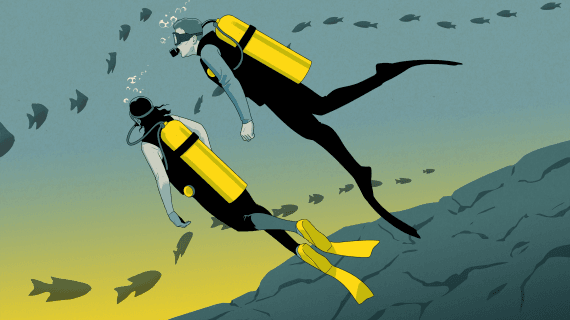
Next time on the show…as the environment minister of the Maldives, Aminath Shauna, was determined to see a fund established to help vulnerable countries, mitigate the damage caused by climate change. And so when she was invited to go scuba diving in the Red Sea with US climate envoy John Kerry, she knew exactly what she needed to say.
Shauna: My daughter must have been about two and a half by then. And for me it was a very real thing to be able to explain what it would mean for my daughter to not have a home when she’s my age.
That’s in two weeks…on The Negotiators.







Our other podcasts
Doha Debates Podcast
Doha Debates Podcast brings together people with starkly different opinions for an in-depth, human conversation that tries to find common ground.

Lana
A podcast in Arabic for today’s generation to discuss their outlook on the world, hosted by Rawaa Augé.

Necessary Tomorrows
Mixing speculative fiction and documentary, leading sci-fi authors bring us three futures that seem like fantasy. We meet the writers who dream of these futures and the activists, scientists and thinkers who are turning fiction into fact.