Topics
Series
Media type
Topics
Featured topics
Arts & Media
Economics
Environment
Governance & Politics
Health
Human rights
Peace & Conflict
Social movements
Technology
Series
Featured series
Doha Debates
Doha Debates Podcast
The Negotiators
Town Halls
Media type
All media types
Podcasts
Videos
Articles
Topics
Featured topics
Arts & Media
Economics
Environment
Governance & Politics
Health
Human rights
Peace & Conflict
Social movements
Technology
Series
Featured series
Doha Debates
Doha Debates Podcast
The Negotiators
Town Halls
Media types
Podcasts
Videos
Articles
June 09, 2020

Parag Khanna: Globalization is a positive for the developing world

Don’t take globalization for granted

Parag Khanna sat down with us to explain why globalization has been an overall net positive—even for the developing world.

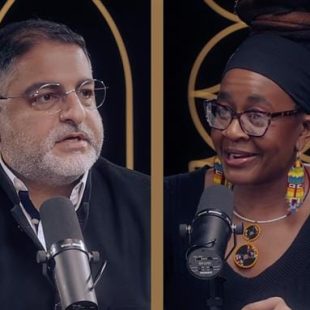
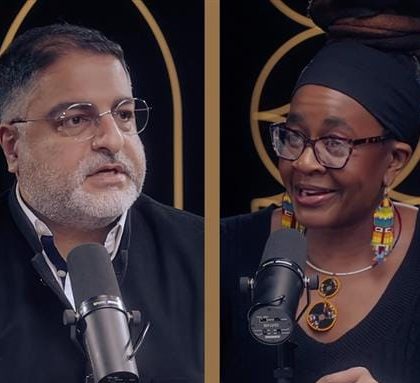
In this one-on-one chat with Doha Debates correspondent Nelufar Hedayat, strategist and author Parag Khanna aims to correct some general misconceptions on globalization. “It should be defined as the movement of goods, people, services, data, ideas, technologies from place to place. It doesn’t have to be across an international boundary,” he says. Taking a historical look at migration and movement over many millennia, rather than the “blip” of heightened tension in current politics, Parag argues, shows you a different perspective: Movement is innately human. “We have been building infrastructure, roads or pipelines or railways or airports for centuries. This is something that is who we are.”

The next step, after realizing that we are always building connectivity, is to reflect on it and make sure that we’re harnessing this incredible process for maximum human benefit, he continues. Much of that, however boring it sounds, is continuing to build dependable infrastructure—which creates unquantifiable value. Parag gives the example of making a simple phone call to someone. We often think that using a cellphone is wireless, something “that’s just in the ether.” What we can’t see, and end up taking for granted, is the infrastructure that was built to enable this seamless connectivity. The same goes for building a highway; one can’t even measure the chain reaction of benefits in improving that area’s economy, the way one can’t measure the benefits of being able to reach someone across the world on the phone in a few seconds.


“Let’s remember people. The original globalization is us, our migrations.“

These, of course, Parag acknowledges, come at great cost to the planet. But he reminds us that “there are winners and losers from climate change,” which influences and weakens global agreements because each country has a different stake. Therefore, more effective than diplomatic summits is local activism and local decision-making, as countries become more independent thanks to globalization. He highlights the transition from colonial exploitation to many countries finally able to make “their own decisions about how they’re going to participate in the world,” though also recognizing that the world is still very unequal in how power is stratified.

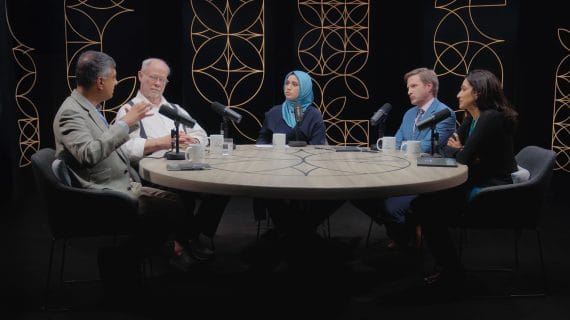
If you find Parag’s optimism for the future to be contagious, check out our full debate, which includes his 5-minute argument “Globalization doesn’t fail, we do,” followed by a lively discussion on just how local local activism should be.

Featured

NL9A9365 rotated e1762867944219 104 104

Parag Khanna

Global strategy advisor and author

The full debate

Globalization | FULL DEBATE | Doha Debates

More on this topic

DD MS STUDENT EXPERIENCE CLEAN v2 570 320
Governance & Politics

“Transformational”: the journey of young debaters

Town Halls
OPTION CLEAN 6 570 320
Governance & Politics

Has modern architecture lost touch with humanity?

Doha Debates Podcast
S2E8138 MINS
OPTION CLEAN 5 570 320
Governance & Politics

Are we facing the end of civilization or its rebirth? 

Doha Debates Podcast
S2E7138 MINS
06 Podcast TECH UTOPIAS THUMB CLEAN 2 570 320
Technology

Will tech utopias rescue or ruin humanity?

Doha Debates Podcast
S2E6115 MINS
EPI 3 THUMB OPTION WEB 570 320
Peace & Conflict

After Gaza, who sets the rules of global justice?

Doha Debates Podcast
S2E3133 MINS
Negotiators S5 E6 1500 1000 WEB 570 320
icon
Peace & Conflict

Negotiating a place for women at the peace table

The Negotiators
S5E638 MINS
Negotiators S5 E5 youtube 570 320
icon
Peace & Conflict

How a small island nation pushed for a deal on loss and damage

The Negotiators
S5E539 MINS
ARGENTINA TH THUMB CLEAN 570 320
Governance & Politics

Architecture & Urbanism: How should we reinvent the city?

Town Halls
90 MINS
Negotiators S5 E4 GettyImages 1534870532 1500 1000 CLEAN 570 320
icon
Peace & Conflict

Negotiating Gaza: From Hostage Deal to Ceasefire

The Negotiators
S5E450 MINS
BLF WEB THUMB option A 1 570 320
Governance & Politics

The Future of National Identity and the Nation State

Town Halls
90 MINS