Are lost ancient civilizations real?









January 21, 2026
How a Sri Lankan mother became an unlikely negotiator for peace
S5
E7
38 MINS
When her son went missing in Sri Lanka’s civil war, Visaka Dharmadasa began organizing other families of missing soldiers. What started as a search for answers led her and a small group of mothers across front lines to meet with the Tamil Tigers. Soon, Dharmadasa found herself shuttling messages between the Tigers and the Sri Lankan government, opening a rare channel of communication that helped build trust. In this episode, Dharmadasa reflects on loss, shuttle diplomacy, and why women’s participation in peace efforts still matters 25 years after U.N. Security Council Resolution 1325.
The Negotiators is a podcast from Doha Debates and Foreign Policy—and a special partner this season, the International Peace Institute.


Full Transcript
Welcome back to the Negotiators. A production of Foreign Policy and Doha Debates. Hello, I’m Femi Oke.
Last week we heard from Sanam Naraghi-Anderlini about UN Security Council Resolution 1325 – which declared that women should not only be protected from gender-based violence during conflicts, but they should also be invited to meaningfully participate in peace processes and decision making.
Through her work after the passage of 1325, Sanam met a mother from Sri Lanka named Visaka Dharmadasa.
Here’s Sanam.
Sanam: I met her in New York and we were sitting in a coffee shop again in the Millennium you know, hotel cafe at the UN, very bland place. And she was telling me the story of what she’d done and Visaka had lost her son in the Sir Lankan conflict. He was an Army officer. And the Tamil Tigers at some point raided one of the camps and he was missing. And she’d mobilized 600 other families and started a sort of a mother’s campaign And then led a group of them into the jungle, led a group of seven women into the jungle for the first encounters with the LTTE. And their process and what they did there kind of set the stage for, a couple years later of a ceasefire negotiations from which they were excluded.
Sanam was setting up a commission on women peace builders and she asked Visaka if she’d be willing to help. Her response was surprising.
Visaka: She looked at me in the eye and she said, yeah, but I’m just a simple mother from Kandy from the hills. That’s how the Tigers know me. And I just remember laughing at her and saying, the last thing you are is simple. You’re one of the smartest women I know. And that’s where our kind of friendship and our relationship built up over and, and, and over the years, I went there and we’ve continued working together. And she is just a force of life and energy and wisdom and kindness. I mean, she’s always able to advise and mentor people to just say, okay, take a step back and look at it from this angle and, and, you know, let’s figure out how to make this work as opposed to being confrontational.
Visaka Dharmadasa was in New York recently, and she spoke with producer Karen Given.
—-
The Sri Lankan civil war was already in its 15th year when Visaka Dharmadesa’s second son joined the Sinhalese army. He was sent to a military camp in the far north of the country – deep in Tamil Tiger territory.
One day, in late September, 1998, Visaka was in her kitchen, preparing fish balls to take to an alms giving. That’s when she suddenly got the feeling that something was terribly wrong.
Visaka: We had a dog called Snoopy, and Snoopy was sitting bes ide me. But suddenly Snoopy collapsed. And I, with all the fish in my hand, you know, uh, held him and then he slowly got up. So that was not very, um, I didn’t feel good about it. This was on the 27th of September. And then the news said that the camp was attacked and three people were dead.
The news would get worse. Much worse. Because soon Visaka would learn that her second son was missing. He hadn’t returned to the camp after the battle.
Visaka: It was through another person, not really a friend, who called my husband, in fact, and told that, uh, he has not come to the camp. I mean, we kind of didn’t believe. But then my older son was also in the battlefield, but in the sense, like, different location. I called him and he said, don’t worry, because when he called, they told that he already come to the camp.
But, after what happened with Snoopy, the dog, Visaka couldn’t shake the feeling that something was wrong. Like about 70-percent of Sri Lankans, Visaka is a Buddhist.
Visaka: I called the village temple to ask for blessings. And the monk told me that they have a big ceremony there and they’ll definitely have blessings for my son.
Days went by, and still Visaka’s son had not called home. She was beside herself with worry.
Visaka: It’s only on the 1st, when my oldest son came home and called the camp and told, give the phone to the brother. Then only they told that he didn’t come.
Karen: And he’s not the only soldier who went missing that day, right?
Visaka: Uh, it was 609 soldiers who went missing from that one battle.
609 soldiers. All classified as missing. But we have to talk about what the word missing means here. Because as many as a thousand Sri Lankan soldiers died that day. Many were left behind enemy lines. Hundreds of bodies would eventually be turned over. But the Sri Lankan army didn’t wear identification tags. And by the time the bodies were recovered, there was no way to identify who was dead and who was still missing.
[MUSIC]
The horrors of war were nothing new for Visaka. She’d been living with the seeds of it for her entire life.
Visaka: We are a multi-religious, multi-ethnic, country. People of all faith and all ethnicity, especially the Singalese and the Tamils. And in Sri Lanka, mainly in the north and east areas, there are Tamil people and also in the Central Hills. Singalese are Buddhist and Christians, but majority are Buddhist. The Tamils, they are majority are Hindus, but they are also Christians.
Visaka: In 1947, we got the independence from the British. All communities worked for the independence. But together with India, we got the independence. And in 1956, our language was English, the official language, it was changed to Singhal and Tamil. But mainly because of the majority and some steps taken by the politicians, the Tamil people, especially in the North and East, who are well educated, was not happy. And they wanted a federal system of governance because they wanted power to be devolved. For them to decide on their day-to-day matters.
Visaka: And this was not done. And in 1983 there was 13 soldiers were killed in Jaffna. We call it the Black July. And then of course, the war intensified with several groups, but finally it was the Liberation Tigers of Tamil Elam, who was leading.
For those living in Tamil territory, the war was an everyday reality. But Visaka says, for many of her fellow Sinhalese, the fighting didn’t seem to have much of an impact on their lives.
Visaka: The war was in the north and east of our country, which is a very small country. But elsewhere, the people were very normal. I mean, people had their day-to-day living and you know, all entertainments, even in the TV, you don’t hear much about the war. They didn’t want to disturb the people though there were like hundreds were dying.
Visaka: As a mother of two military officers of my country, I was very concerned. I have a good friend, exactly, she’s a mentor, a former principal of my school. Together with her we created what we call the Kandy Association for War Affected Families. And we thought that we will bring people together, women together, speak to the women of, you know, the Lions Club, all these elite groups, and tell them that there is a war in our country. That was exactly even before my son went missing. We were together doing that. And then as I always say, the day that the war was at my doorsteps was the 27th of September, 1998. And I never looked back.
<music>
Visaka: I had this close relationship with the International Committee of the Red Cross. So, as soon as this happened, I went to the Red Cross and told them they have to open a file for my son. But then the ICRC told me that their regulation says that since he belonged to an, you know, entity, it has to come officially through the entity. So I went to the Army camp and I told them that, I need a letter, an official letter, and you have to inform the ICRC. So then they said, look, we are fighting a war. We have to have a court, you know, inquiry and everything for us to write a letter like that. So we were kind of sandwiched between the ICRC and the military. Because ICRC says that within six months, opening a tracing request is really important if you want the person alive.
Visaka was still hoping that her son would be found alive. But, of course, she knew that many of the soldiers had not survived the battle.
Visaka: When a person is dead, we do have a three day ceremony, seven day ceremony, and then three months. What I did was, I wrote to the Army telling, okay, it’s three months. You know, traditionally we have to have a ceremony for three months. Will you do something? Then they said, no, but if you want to do something, we can give the names. So I got the names and addresses of the families of this 609.
Visaka: I invited all of them to Kandy for a religious ceremony, as well a protest. You know, right to life. I didn’t have a computer. I typed the address of the ICRC, you know, 47 Layards Road, Colombo 5 for all of them. And handed to them and told, bang the gates of ICRC. Tell them they have to open tracing requests.
[music]
Visaka: Because it was a religious ceremony, we had flowers, offering. We took the flowers and put through the river, which the river goes to the eastern province. You know, that’s how it goes through the ocean. So we put the flowers thinking, okay, the flowers will take our message. You know, as parents, you do every possible thing, right, because you don’t know, and you have no one to tell other than the God.
Visaka: Thanks to ICRC, they change their regulation, telling that the next of kin can come and inform and tracing request can be open. So that’s a big achievement.
Visaka had managed to convince the International Red Cross to change their rules. But she still didn’t know what had happened to her son.
The Sri Lankan military wouldn’t give her any information. So Visaka wondered, could she get it from the Tamil Tigers? The only problem was, the Tigers were on the other side of the country. On the other side of no-mans-land. Deep in the jungle. It was a place Sinhalese citizens weren’t allowed to go. But Visaka had an idea for how she could convince the government to make an exception.
Visaka: There was a very special shrine. My mother is a Catholic, a Burgher Catholic, so she used to speak about this particular shrine.
It’s called the Shrine of Our Lady of Madhu – after a statue of Mary that was rescued by Portuguese Catholics after the island was invaded by the Dutch in 1670.
Visaka: The Portuguese carried and ran because when the Dutch came, they were persecuting the Portuguese, so we had to carry the blessed sacrament and run to the jungle. So there they have this special Catholic church for our lady.
Before the war, up to a million pilgrims would visit the shrine every August. During the war, the huge complex became a place of safety for refugees.
Visaka: We wanted to go there. I mean, that’s how we told the government that we want a special permission to go to worship in this special shrine.
Visaka: I met a bishop who is now the cardinal of the country, the highest Catholic priest. At that time he was a bishop. I went and met him in Kandy and I told to make a connection for me to go to the north, you know, through the church
Visaka wouldn’t be going alone. Seven other mothers of missing soldiers would join her. And together, they would ask the Tamil Tigers – the LTTE – for news of their sons.
Visaka: So it took a long time to get the permission from the government. You know, they were telling, are you mad or something? You want to go, they’re Tigers, they’ll kill you. And I said, then how dare you send our children? Right? So of course, arguing and everything. Finally I got a letter. I still have the letter. I was telling my office girls that I really have to maybe scan and, you know, I don’t know whether I have done that with those letters.
[music]
Visaka: So we went to the jungle. Only the driver was a young Tamil gentleman, but all others are seven was women.
The women set out on Mother’s Day, 2001.
Visaka: You know, it’s a lot. At least couple of hours of frisking checking every possible thing. You know, it’s an active battlefield. It’s mined, both sides. It’s mined. So, um, we have to go like on a convoy. You know, the normal people wouldn’t go at least another 40 kilometers before they will stop moving beyond from there.
Karen: So as you’re in that van and you’re traveling, what are you thinking? Are you afraid? Are you…
Visaka: No, no. Never was afraid. And I’ve also, even now I want to, uh, really, really appreciate and I’m grateful to the husbands of those women who relied upon me and sent me. You know, that’s something which I, at that moment though, I didn’t even think about it. But that’s a huge responsibility, frankly, when we got back I was so relieved because it’s not a joke. All of us could have been dead.
But Visaka wasn’t afraid…not even when she looked out the window and saw that the van was surrounded by LTTE soldiers.
Visaka: Youngsters wearing sarongs and in bicycles, but all of them had the T 56 guns on their back. They were circling the vehicle.
Visaka: From there then, I think definitely someone would’ve escorted us. Would’ve got into the vehicle. They wouldn’t have let our vehicle go alone. And then of course, the men checking, checking up to every inch and every possible thing.
Visaka and the other mothers arrived at the shrine and were shown to a small house where they would be staying.
Visaka: It’s a massive compound. They had like, I think one kilometer from the church was no weapons zone. Though it was controlled by the Tigers, no one could come with weapons there. So it’s a safe zone you know, we saw women even in the night coming and sitting and praying so they were safe. Women going out alone, sitting and praying. That was something that we saw in that church, which is very, very special.
The church made arrangements for Visaka and the other mothers to spend a few days at the shrine. And they did something even more important. They convinced the local leader of the Tamil Tigers to come to a meeting.
Visaka: And he came. The room had only one chair. We sat on a mat, got him to sit in the chair, but he said, no, no, no, no, no. If mothers are sitting on the ground, I sit on the ground. Okay? He sat on the ground. And the first thing that I told him was that we came to see your claws and teeth, because everybody says that your tigers, right. I mean, they said they’re tigers. He started telling, okay, you are military because we are all mothers of the military, right? Your military is bombing us. I mean all, all the horrendous things that the military is doing. Then I said, yes, you are all same. You have been hacking pregnant women. I mean, and, and I said, that’s enough. Now let’s look forward. Let’s see how best we could stop this because it’s not going to go anywhere. So that’s how we started.
Visaka: So the first day we asked him, shall we have a cup of tea? He said, no, no, no, no, no. I mean, no, We’re not going to take from you all. Okay. The second day he comes, then we told him, we are going to have tea. Would you like to join? Right. And, you know, there was an economic embargo. So many of things didn’t go to that site. So we took some sweets from South and we offered him some sweets when he was. We ask him, do you have children? Yes. Two small girls, you know? So all that really made us closer as mothers and sons.
Before they left for the shrine, Visaka and the seven other mothers had all written letters to the Tamil Tigers. They kept the tone friendly and light. They asked the Tigers for any news of their sons. And they asked for an end to the fighting. Visaka collected all of the letters in a green folder.
Visaka: So I gave these letters in a green color folder, to go and give to their political head.
Visaka: I’m really happy when I really look back, a mother of a missing son. How did I even do that? Right. It’s, it’s, it’s difficult. It’s difficult because, I mean, I’m going – was going through a lot. I’m still going through a lot, trying desperately to know. So it’s not easy. Not at all easy.
Femi: You’re listening to The Negotiators. On each episode we look at one dramatic negotiation — through the lens of one of the participants. More after the break.
BREAK!
Visaka Dharmadasa and her group of fellow mothers stayed at the Catholic shrine for five days, meeting with the local LTTE leader multiple times. But while they were there, tensions flared between the Sri Lankan military and Tamil forces. So when it was time for the mothers to leave, the local leader had to signal ahead to clear their route.
Visaka:This person had to take a lot of trouble, had to, to get people to climb trees, to get signal, to get us out. Anyone could have been a hero of killing us. But I must also say the Tamil Tigers at that time was disciplined.
Visaka: That visit was something I think very, very special. We didn’t know that we will be brokering the ceasefire. We didn’t know anything. It was sheer the necessity to know what happened.
A little more than six months later, in January 2002, Visaka was back at home…when she got a call.
Visaka: From a Singapore number. The number was Singapore, like 0 0 8 6, I think, asking me to come to, meet them. And I said, how do I know you are calling? They said the green color envelope.
Visaka: So then I knew definitely I’m getting the call because they wanted me to cross the border. They told come the same day and I said, no, I have to get other parents coming from Colombo. So for this trip, there were two men also joined us. And another lady who was working for peace because she was desperately to go, so she said, I, I really want to come. So she came.
Visaka: So we had to cross, they said cross before, like, a certain time. I went to the ICRC in ??, the north most town, and I, it was like 1:00 AM I knock at their door and I said, I just want to let you know that we are crossing. And then, um the military told us the Sri Lankan military told us, don’t cross at this time you know, they are on duty outside and always there can be a mistake. So wait till you see like person to person till dawn. So we sat in the bunkers of the military and speaking to them. We were asking like, what are you doing? Like, you know, just sitting and waiting the whole night. No, no, we are studying. So they were studying summer reading for the A levels, for their degrees, you know, and we waited till the first light of the dawn and then we crossed
Visaka: First they took us to the same church and gave us breakfast. And for another one and a half days, they took us to Kilinochi, to their center. Now why it took one and a half days? Because all the bridges were broken. Bombed. And they were taking us from a different route so that we will not know. So at one point I was telling I smell the ocean. No, no, no, no, no. We, You know, I did smell the ocean and I knew they’re going towards manna and coming, so they’re going on a huge circle. So that’s why it took a long time.
Visaka: So when we got there, I told, I mean we want to have a shower because it’s like, you know, how long, so there was a big ceremony organized by the LTT to release nine people. They brought 60 journalists, national and international, for the ceremony. And they kept these people for that one and a half days and against still, we took a shower. So that showed how important we were. So of course, they didn’t release any uniform person. Only some civilian cooks of the military and some civilians were released symbolically in front of us.
Visaka began passing messages between the Tigers and the government of Sri Lanka.
Visaka: Very simple message. It’s not anything more. Looks like they’re ready, so this is the time that for you to extend. You know, that kind of messaging. It was like shuttle diplomacy, as they call it. I mean, later I learned that. We have been fighting for a long time. Nobody trusted each other and they trusted us. Because we didn’t have any agenda. That’s important. I always tell for the peace builders, don’t have any personal agendas. If you’re really going to build peace, you cannot have any personal agendas. Maybe you won’t – they will not even acknowledge that you did it. Just like for us, you know, we were not acknowledged that we did it, but it doesn’t really matter as long as the guns are silent.
In February of 2002, the Sri Lankan government and the LTTE agreed to a ceasefire – negotiated and monitored by Norway. And while Visaka’s name does not appear in the history books along with those of the Norwegian negotiators, she still feels a sense of pride for helping to make it happen.
Visaka: There was these talks that the government is going for talks and that Norway is going to come to facilitate. But then there was a lot of against also, like, why should Norway come and all. But we thought it’s not only the government, but the civilians should go to Norway. Tell them, we also want you to come and facilitate. Because you know, when there is an issue, even between two individuals, like even the two siblings, a person who not taking any side has to be there. So that’s why we thought the Norwegians will be that. And where LTTE could trust, where the government can trust.
Since that first trip into the jungle, Visaka and her organization, the Association of War Affected Women, had been visiting every district in the country bringing their message of peace to places of worship.
Visaka: Every religion, churches, mosques, temples, Buddhist temples, Hindu Temples, and met the people and told, look, our sons are missing. If you don’t want your children to go missing, sign this document. So everybody was spoken to and the signatures were taken. 70,000 of them. Took to the Norwegian Embassy on a Saturday, thanks to ambassador Westburg. He came to the mission on that Saturday to accept our signatures.
Visaka: So once the Norwegians came and talked and then they agreed on a ceasefire to continue the talks. Of course that ceasefire, I mean, there are a lot of shortcomings to any ceasefire, but at least if we can save one life, I think we have achieved. That temporary ceasefire held for a pretty long time, until the talks broke in 2003.
Visaka’s efforts might have helped her country get on the road to peace, but none of them got her any closer to finding out whether her son was dead or alive.
Visaka: The last, when I spoke to my son, he said that he have come to the dentist to fill his tooth. So I wrote to the army commander, said that my son has, you know, a denture, so please, please go on checking the bodies, you know, the remains to identify. So this was a big call, how to identify them.
Another organization Visaka founded, the Parents for Servicemen Missing in Action, successfully sued the government to require DNA testing of soldiers’ remains. But Visaka still does not have any answers.
Visaka: No, even not today. You know, 27 years, even not today. I don’t know. And I want to know, and I think before I die, I am 68 years old that I will know exactly what happened. And I’m on the hope that he may be alive somewhere. That’s gives me the hope. I do have his soap. He wanted sandalwood soap, which my husband brought that’s there in my bathroom right now. There are some chocolates – because when both the older boys come home we had two ice cream cans exactly where we put the chocolates and kept all cakes or whatever, whatever special things we got. So his, is still there in my freezer.
Karen: Did any of the women in your group find out what happened to their sons or are they all still waiting?
Visaka: Everybody’s waiting. Some maybe even not alive. But yeah, you know, that’s the difficult part. Not knowing is the most difficult part.
Visaka wanted to prevent other mothers from suffering the same uncertainty she’s been facing since September 27, 1998.
And that same year, a movie came out that gave her an idea.
Visaka: Saving Private Ryan. Watched it. Screened it for the others to watch.
MOVIE CLIP: Jackson. Start going through those. Yes sir. I’ll help.
Maybe you don’t remember the scene. I didn’t.
MOVIE CLIP – (clanging)
A group of soldiers sit in a circle, looking through a sack filled with identification tags, to try to figure out whether the soldier they have been sent to bring home has survived the latest battle.
MOVIE CLIP: You know what, you’re a genius. R-I-E-N-N-E. That’s French.
Visaka pressured the Sri Lankan government to issue identification tags, like the ones she saw in the movie, to make it easier to identify fallen soldiers.
Visaka: Because Sri Lanka was the second largest after Iraq, I think, on disappearances. ICRC had about 12,000 records. Maybe some were resolved. Yeah, it, it, it’s a lot. I mean, the war is one thing. What I always say that what we learn in Sunday school, whichever religion, what we learn in school, all those norms, regulations, rules are broken legally, when there is a war situation. So we were looking at how we can humanize the war, take steps to humanize the war. So, identification of a dead person is extremely important. And I think that’s one of the biggest violation of human rights. But that’s not also spoken so much.
[MUSIC]
The Sri Lankan war ended in 2009, not through the efforts of negotiators like Visaka – or even the Norwegians – but because of a three year offensive launched by the Sri Lankan military.
Visaka: We didn’t have a final negotiation. Our talks broke in 2003, then went back again to active war. And Sri Lankan military won the battle. So no agreement whatsoever. Still the root causes have to be addressed after 2009. Up to now, it’s not done. Mainly devolving power, fully devolving the power. The disappearances issue is very imminent because the final phases of the war, lots of people went missing – civilians and from both sides. So, you know, it’s very fragile in the sense it have held all these years, and maybe we will not have, but anything can trigger. And that’s exactly the work that we do.
Visaka: If you ask today, what’s the biggest wealth that I have earned, is the trust from everybody. I go to any part of my country, people trust me. And that’s the biggest wealth that I have. Even right now, I’m, I’m trying to prevent a war situation or any uprising or a conflict which can turn to armed conflict. People trust me and that’s why I could do that.
[MUSIC]
And this is where Visaka’s story comes back around to Sanam Naraghi-Anderlini and UN Security Council Resolution 1325. Because soon after 1325 was passed in late October 2000, news made its way to Sri Lanka, where Visaka was joining with other mothers to try to bring about an end to the war.
Visaka: So 1325, came to know in year 2000 itself, but th en I think it was 2003, there was this debate where Sanam inside the U.N. They had this debate, dialogue, whatever it is that really, really made me to understand the resolution 1325 and that we have to disseminate it back in Sri Lanka. And I got German funding and we called it Taking 1325 to the Village. And we had workshops in every village, in the 25 districts. So that was carried out everywhere. And even right now we are carrying out some special workshops on Resolution 1325 funded by the Canadians.
Karen: I feel like we could talk about this one question all day, but why is it important to involve women in the peace process?
Visaka: Okay. Very good question. I mean, because of the fact that men and women look at issues in a different way. We are socialized in different ways. Normally, at home, the boys are given the responsibility of protection. So for men, the border or the fence is more important. For the women, it’s the life. The friendship. That is what is important. So that’s exactly what we bring different to the table.
Visaka: Another good example, I always say, you cut your hair short. You had long hair. Your husband comes home, you have to turn around and show, and otherwise he will not notice, But when he comes home from his footsteps, the way he opened and closed the doors, we do know whether it’s a good day or a bad day. That’s exactly we can use for peace building for stopping conflicts. This is extremely important. We are human beings. The walls are fought for human egos. So it has to be also tackled emotionally first to come together to have trust of each other. That’s why we need women to be there.
[music]
I spoke with Visaka Dharmadasa while she was visiting New York in late October of last year. She came to town for an event celebrating 25 years of UNSCR 1325, held at the International Peace Institute – which happens to be located across the street from the United Nations, where elections for the next Secretary General will be held later this year.
Visaka, Sanam and the other women at the event had an idea for who should get the job.
Visaka: We have come to a very difficult time. I mean, the world. But I believe that women, together with men, will change the world. And so we are not going to ask to listen to us, but we are demanding that you cannot move forward unless you listen to us and walk the journey together. This is why we were yesterday advocating 2026, a woman S.G.
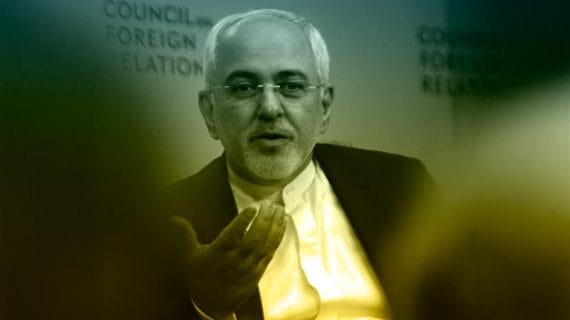
Next time on the show, in Season 1, we heard about the 2015 Iran Nuclear Deal from the American perspective. Now we hear about the deal – and the backlash in both the US and Iran – from Iranian lead negotiator Mohammad Javad Zarif.
Zarif: In our political psychology in Iran, we’re used to resisting. In American political psychology, they’re used imposing. So, we get into trouble with our own domestic audience because they said if you did not resist, it means Americans imposed. And for American domestic politics, if you didn’t impose, it meant that you didn’t get what you wanted. So we were in a situation where the public couldn’t believe, neither in Iran nor in the United States, that we did not fool each other.
That’s next time on The Negotiators.



Our other podcasts
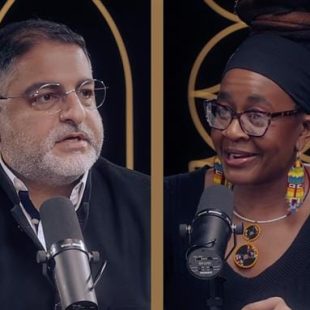
Doha Debates Podcast
Doha Debates Podcast brings together people with starkly different opinions for an in-depth, human conversation that tries to find common ground.

Lana
A podcast in Arabic for today’s generation to discuss their outlook on the world, hosted by Rawaa Augé.

Necessary Tomorrows
Mixing speculative fiction and documentary, leading sci-fi authors bring us three futures that seem like fantasy. We meet the writers who dream of these futures and the activists, scientists and thinkers who are turning fiction into fact.