Are lost ancient civilizations real?










January 27, 2026
How Iran and the US found common ground—and lost it again
S5
E8
30 MINS
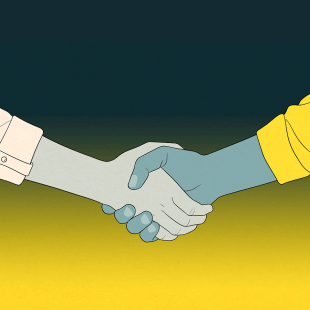
The United States and Iran have sparred for decades. But in 2015, during President Barack Obama’s second term, the two countries successfully negotiated the Joint Comprehensive Plan of Action (JCPOA), known more plainly as the Iran nuclear deal. The deal was hailed as a breakthrough in much of the world, but it also had its critics. In 2018, President Donald Trump withdrew the United States from the JCPOA, and Iran went back to expanding its nuclear program.
Mohammad Javad Zarif was Iran’s foreign minister and lead negotiator during the talks. In this episode, Zarif offers a rare glimpse into the Iranian perspective, why the agreement failed, and what it would take to negotiate a new deal.
The Negotiators is a podcast from Doha Debates and Foreign Policy—and a special partner this season, the International Peace Institute.


Full Transcript
Welcome back to the Negotiators. A production of Doha Debates and Foreign Policy. Hello, I’m Femi Oke.
This week on the podcast, we’re talking about negotiations between the United States and Iran—never an easy topic. The two countries have sparred for decades on various issues, including Iran’s nuclear program.
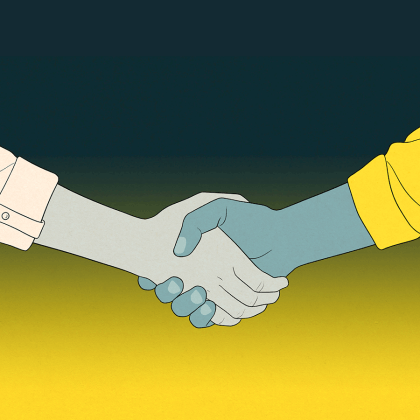
But Iran and the United States can point to one major agreement that they negotiated successfully. This was back in 2015, during President Barack Obama’s second term. The agreement was known as the Joint Comprehensive Plan of Action, JCPOA, or more plainly, the Iran Nuclear Deal. I’m simplifying here but basically Iran agreed to limit its nuclear program in exchange for American and European sanctions relief.
The deal was hailed as a breakthrough in much of the world but it also had its critics. In 2018, President Donald Trump withdrew the United States from the JCPOA, and Iran went back to expanding its nuclear program.
During the first season of the show, we featured an interview with Wendy Sherman, a senior State Department official who led the American negotiating team to the successful talks with Iran.
Wendy Sherman: There were hundreds of sticking points, literally thousands of sticking point, but you have to find common ground and part of the way you do that is through human interaction. It doesn’t change your objectives, it doesn’t how tough you are in the negotiating room, but it does allow you to see each other in more human terms and probably have more civil conversation.
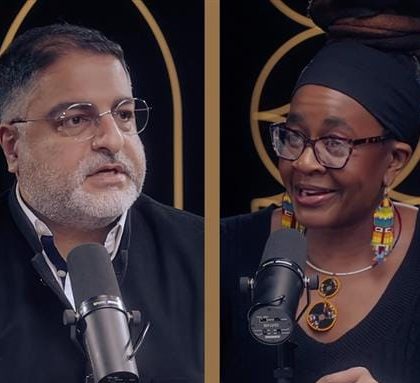
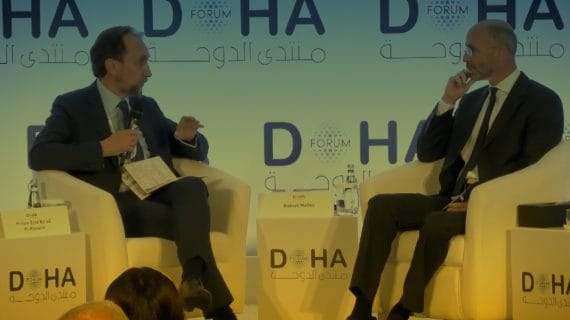
Today, we hear from the other side. Mohammad Javad Zarif was the Iranian Foreign Minister during the talks and the lead negotiator. He sat down with Foreign Policy’s editor in chief, Ravi Agrawal in early December at the Doha Forum in Qatar.
Ravi [00:00:00] Mr. Zarif, so we’re here today to discuss the JCPOA, the Joint Comprehensive Plan of Action, colloquially known as the 2015 Iran Nuclear Deal. And I wanted to start with some context. So Iran’s nuclear program was a source of tension between your country and the United States for decades. Take us back to 2013, for starters, when this is during US President Barack Obama’s first term. Israeli threats to bomb Iranian nuclear sites had peaked, and around about 2013, the diplomats Bill Burns and Jake Sullivan, they traveled to Oman to meet Iranian officials. Talk to us a bit about how those talks came about.
Zarif [00:00:43] All right, let me go one step back and talk about when the issue of Iranian nuclear crisis or problem emerged, and that was in 2002, when it was revealed that Iran had, was building, had not built yet, was building the Natanz facility, and it was portrayed as if this was a bomb-making facility. So, from 2002, we started negotiations with the Europeans called E3. That is why it became E3 plus 3, because it was initially UK, France, and Germany. And then when it went to the Security Council, they had to add the three other permanent members, US, China, and Russia. So, at that time, we were negotiating how to proceed. And we got to a deadlock because the United States was insisting, you know, at that time in 2003 John Bolton was under Secretary of State for International Organization and disarmament was under his purview. And he insisted, as he continues to do today and when he was National Security Advisor, on zero enrichment. And that is why although we could have reached an agreement with the Europeans, we didn’t. At that time, by the way, we had 200 centrifuges. But our GDP was rising by 7%. So we went into almost 10 years of confrontation. During those 10 years, during most of which I was out of office, during those 10 years, we reached 20,000 centrifuges, but our GDP dropped to minus 7%. So this is what I call a lose-lose situation. The greatest hurdle when Bill Burns and my two deputies at the time, one of them now foreign minister, started negotiating in Moscow was whether the United States was prepared to accept an Iranian enrichment program. And that was the hurdle. So we changed the problem, because in my view, much of the negotiations and the to reach a conclusion. Is to define a problem in a way it is solvable. If you define a program in terms of contradictory approaches, you’ll never be able to solve the problem. So in the beginning, we said we have a right to enrichment. Now you’re business. And America said you have to have zero enrichment. So we said, let’s find a common ground. What was the common ground that Iran should never have nuclear weapons? And we could both accept. That that was a common ground and we articulated that in a meeting, the first ever meeting between Iran and the U.S. At the foreign ministers level in New York. That’s okay. If you want to have no nuclear weapons, that’s our goal. Let’s work out on this assumption. So that changed the problem. Once we changed the problem, a solution was reachable and that is how the Moscow negotiations went on the way. The United States was prepared to concede to Iran that it has an enrichment program that could not be, as President Trump is now calling it, obliterated, because it’s scientists’ know-how. And know- how is in the minds of many Iranians. The Israelis killed a few of them, but there are many left, and you cannot just kill the entire population of scientists. So we started on that basis. Iran has an enrich program out there in the open. It should be transparent. It should limited so that it won’t reach weapons capability. And at the same time, sanctions should be removed. Iran, under Chapter 7 of the Security Council, that must end. And that was a deal that was doable. And that’s how it started.
Ravi [00:04:57] Take us now to the formal negotiations that began afterwards, first on an interim deal and then eventually a full-blown agreement. I guess the question I’d like to put to you here is what were the main obstacles that you isolated?
Zarif [00:05:13] Interestingly enough, the main obstacle was American allies. When we started negotiating with the United States, we told them that we won’t negotiate this twice. If we negotiate with you, you will have to convince your allies because the first few rounds were in secret. The Europeans didn’t know about it. Presumably the Russians and the Chinese didn’t not know about. Of course, the Russians were less surprised when it was revealed to them. So they may have had intelligence. I don’t know why the French and the Brits and the Germans didn’t. So we had a few rounds with the Americans. And we had two official rounds between Iran and E3 plus 3. In the second round in Geneva, Wendy Sherman broke the story of Iran-US negotiations to her colleagues. And the French basically blew out of proportion. I mean, they were furious. And let me tell you about the formalities. I did not negotiate with Wendy Sherman. My deputy did. I negotiated with John Kerry, but I was always present in the negotiating venue. John Kerry was usually present, but not as often as I was. The other foreign ministers only came when it was required. So everybody flew to Geneva, all the foreign ministers, and we had a major theater. And excuse the language, but Laurent Fabius called it a sucker’s deal. I’m quoting him, I’m not being impolite. And there was a major, major brawl between, I mean, the Americans and the French, and that prevented us from reaching an agreement in the second round of Geneva talks, and we had to go to the third round. Just to iron out the differences between France and the United States. Unfortunately, the United State tried to take advantage of this French obstacle. In order to increase their demands and in order to basically flip-flop on the agreement that we already had in Moscow. I mean, we did overcome that, but it left a bitter memory that the United States, if given a chance, will not be committed to what it committed.
Ravi [00:07:46] What was it like in general to be sitting across the table from a country that was seen as an adversary?
Zarif [00:07:54] Well, I was used to that because I lived in the U.S. Henry Kissinger called me a respectable adversary. So I was use to being an adversary and respect is something that we always try to maintain. So it was tough, negotiations were tough, not just with the United States. I mean, we had the E3 plus three and the EU with basically six or seven different policies. I just told you that US and France had a major role, Russia had its own interest, China had its own interests. So it was, I mean, several competing interests trying to work out a deal, and it’s tough. It’s tough to find language, and here comes the intricacies of negotiating over words. I mean, some people who were sitting outside come and… Complain about why you use this word, why you didn’t use the other word. This happened in the U.S. I know that Wendy Sherman, during a Senate hearing, had to fight with this. This happened in Iran. People said, why did you say lift? Wendy, when she was under pressure in the US, said lift doesn’t mean remove, it just means suspend. And it doesn’t, Obviously, left in UN terminology means removed. But she was under pressure in the U.S. Senate, so that’s what she said. And then immediately that was translated to Farsi, and I started to be questioned by our parliamentarians and our opponents. What happened? Why didn’t you use obliterate? Why did you exterminate? Why didn you use tougher language? And I said, I mean, this is a seven, eight party negotiations. And when you have a Multilateral negotiations, you don’t get every word you want. You start with your best option, and then you come down. The other side also starts with their best option. That is why the Americans always wanted to say sanctions relief. And they still say that. But we did not accept that. So we got to sanctions lifting. So we had to come down, and they had to come up so that we could meet at a common level in order to be able to move forward. That’s the nature of the game, give and take.
Ravi [00:10:23] You were getting to this already, but every country has its own domestic constraints that you have to work around. What were the main domestic constraints that you had to keep in mind as you were fronting these negotiations?
Zarif [00:10:37] Absolute mistrust of the United States. That was a problem. I believe international relations is not about trust, because in my view, you cannot trust anybody, even your closest allies, in a negotiation. It was clear. The French didn’t trust the Americans. The Americans didn’t the French. So the issue of trust is meaningless when it comes to international negotiations. You need to bring the interests of the various parties to a common denominator. That’s where it clicks. But the problem in Iran was because of our history, the issue of trust was important. Another interesting point. You know, JCPOA didn’t face difficulty. It faced difficulty in Iran and in the United States. Although we had done most of the negotiations, Europeans, during much of the negotiation were simply bystanders. So why did it happen? From my perspective, in our political psychology in Iran, we’re used to resisting. In American political psychology, they’re used imposing. So, if we do not resist and they do not impose, we get into trouble with our own domestic audience because they said if you did not resist, it means Americans imposed. And for American domestic politics, if you didn’t impose, it meant that you didn’t get what you wanted. So we were in a situation where the public couldn’t believe, neither in Iran nor in the United States, that we did not fool each other. We just came to a conclusion that we couldn’t get all we wanted. And the US wouldn’t get what it wanted. It wasn’t a win or lose situation. Had we tried for another win or loose situation as President Trump is throwing now, neither side would win, and every side will end up losing. So it was give and take. The Iranian side wouldn’t believe that we took, and the American side were not prepared to give.
You’re listening to The Negotiators. On each episode we look at one dramatic negotiation — through the lens of one of the participants. More after the break.
BREAK!
Ravi [00:12:59] Tell us a little bit about some of the personal relationships you built along the way. What was it like to negotiate with John Kerry, with Wendy Sherman?
Zarif [00:13:10] It was difficult, obviously, I mean, the entire American delegation, John, Kerry, Wendy Sherman, Rob Malley, Ernest Moniz, all of them were top negotiators, were obviously American patriots, so they defended their position, we defended ours, and we understood that we were representing countries with seriously different viewpoints. About what is transpiring in the global affairs. But we tried to maintain stability. We had shouting matches. Couple of times when we had meetings, the security, my security, and John’s security were standing outside the door. And at times, they just broke in, thinking that we were in a fist fight. But we weren’t, I mean, I’m used to speaking loud because I have problem of hearing, so naturally I speak loud, even with my family. And it got heated at times. So that was interesting. When John and I met on many occasions, either Cathy Ashton when she was the high representative or Federica Mogherini when she became high representative, we’re sitting in the room and we’re part of negotiation. And a couple of meetings that we had with Ashton and John, we reached the prayer time. And I asked permission from the two so that I could pray in the same room. I just got to the corner of the room and prayed. And while I was praying, Cathy and John started discussing about God and religion. And then I joined and John and I were defending religion and Cathy was on the other side. So we had these interesting moments. Where we had closer understanding than one of your allies. This happened to me. Let me give you an interesting history. In 1991, 1992, I was chairman of the UN legal committee. And there were two fights in which I had to mediate, one between the United States and European Union and the other one between United States and Mexico. The fight with the European Union was over there. Establishment of the International Criminal Court, and the fight with the Mexicans was on a request for an advisory opinion from the International Court of Justice on an abduction of a Mexican and a ruling by the Supreme Court. So the negotiations took a long time, and then the American ambassador who was participating in the negotiations told me, had Washington known that an Iranian ambassador is mediating between us and others. Closest friends, they will be infuriated. So this happened during the Geneva and the Vienna talks, where at times Iranian position was closer to the United States than the French position to the US, and at times US position was close to Iran than Russian position.
Ravi [00:16:17] Wendy Sherman on this very podcast recounted how she was often the only woman in the room, and she immediately learned that she couldn’t be shaking the hands of Iranian diplomats. And when she learned that, and one of the things she says on the podcast is to break through with you all and to try and be more relatable, she explained how she grew up in a Jewish household. And Orthodox Jews have a similar system where the men don’t shake hands with women unless they’re very close family members. And she said that that broke through in some ways and was a point of connection between her at least and her interlocutors. Did you find similar moments of breakthroughs with your interlocuters that rose above national differences?
Zarif [00:17:12] Well, if you want to reach an agreement, you have to put yourself in the shoes of the other side. You have to see their perspective. There’s a famous book, Getting to Yes, which is basically a Bible for negotiations, and that’s a basic rule. You should put yourselves in the other side’s shoes and think like them. That is why in my negotiations classes, I tell my students that the most important part about negotiating. Is not talking, it’s listening. You have to understand the anxieties, the concerns, the rep lines of the other side and to try to work out a language that addresses it. Negotiations is not about convincing the other sides. The other side who is coming to you to negotiate are not a bunch of kids, they’re not a buch of rookies, they are experienced diplomats with clear instructions. And it’s not about telling them that you’re wrong or right. It’s about telling then how we can meet at a certain point based on our respective national interests. So you need to listen more than talking. Anybody who talks a lot in a negotiation tends to lose because the other side can take note of their anxieties, of their concerns, and then come up with language. Would at least satisfy in their view. So it becomes a human exercise. And in human exercises, when you start to listen, the dehumanized picture that you had of the other side starts to melt a bit. Of course, it shouldn’t reach the level of naivete where you would start believing that the other side wants the best for you. No, the other wants the rest for them. And this should be clear in every negotiations. And I think we broke that, basically, barrier in listening. And I thin most of us did listen a lot. Another, maybe innuendo, is that John Kerry used to take a lot of notes. Basically, a full yellow pad, entire yellow pad in one meeting. And I once told him, please, listen. Don’t write. I mean, for myself, I cannot write and listen. And I told him, when you write, you can’t listen. And when you don’t listen, you don’t get to develop a sense of interaction with the other side.
Ravi [00:19:56] So I have to point one thing out. Wendy Sherman said on the podcast that there were often these long negotiations and you were reaching close to a deal. Or she imagined that you had reached a deal when the Iranian side would say, oh, one more thing. And she found that very frustrating. Was that a strategy?
Zarif [00:20:17] But no, that wasn’t the strategy. In her books, she says she cried once because Iranians had raised their demands, everybody. I mean, again, to my friends and students, I say we stayed all night negotiating. And then when I went to bed, John Kerry gave the results of negotiations to his lawyers in Washington. And they developed three drafts, none of them resembling what we had negotiated. So I have the same complaints that the Americans, after negotiating, came up with drafts. I mean, the negotiations were mostly verbal negotiations. And when it came to the text that the U.S. Prepared, it wasn’t the same thing that we had agreed. So what we did was, I usually go to bed early. So my colleagues did the negotiations until very late at night with Wendy, when I wasn’t doing it with John Kerry. They put their notes under my door. When I wake up in the morning at 3 o’clock usually, I took the papers and I wrote our own draft. So we actually reciprocated what the Americans were doing. But they were giving it to their staff. My colleagues were giving get to their boss. So I did the drafting for most of the talks that they had at their level. But the Americans do the same. I mean, we tried. Raise the demands because we knew that they would raise the demand.
Ravi [00:21:49] So I want to fast forward a little bit in the interest of time. Trump becomes president. He pulls out of the deal. What was your reaction to that at the time? And then also take us into the future. What would Iran have been like if that had never happened, if there was no revocation of the deals?
Zarif [00:22:09] Trump was, I mean, had two problems. The obvious one was Obama. He didn’t want to have anything to do with anything that had Obama’s name on it. OK, so that was a personal problem. The other problem was John Bolton and Pompeo. John Bolten always believed that the U.S. Should push for zero enrichment. And he believed that anything that enabled Iran to have any enrichment was bad. So he did his best to convince Trump that through pressure, they could get a better deal. I don’t think they could at that time. Even after bombing Iranian facilities, I don t think they can get a good deal today. The best deal is enrichment under supervision and transparency. You cannot push Iran into a no-enrichment scenario. We can work out multilateral enrichment, regional consortiums, I’ve written in foreign policy, I’ve written elsewhere about various types of arrangements that you can have. But the basic thrust of any agreement should be enrichment for transparency.
Ravi [00:23:32] Are there any concrete steps today that any side could take that could lead us in that direction?
Zarif [00:23:38] Well, I guess they are provided that they come down to earth and recognize the realities. In the national security strategy that the United States just published, it is clear that they are missing the realities in the Middle East. They think that the Palestinian problem has been resolved. Well, that’s wishful thinking. They think the Iranian nuclear problem has being resolved. I mean. Iran was mentioned 17 times in last year’s National Security Strategy. It is mentioned three times in this year. They think that they obliterated the Iranian nuclear program. They’re simply wrong. And I think you will not get to result through wishful thinking. You need to accept realities and to see where you can find common ground. I mean, you cannot impose a common ground A common ground has to come out of negotiations and out of listening. President Trump should learn to listen a bit more, rather than talk.
Ravi [00:24:43] Do you think, politically, is it feasible in Iran and amongst the Iranian people to countenance another nuclear deal.
Zarif [00:24:53] Well, it’s difficult, much more difficult than 2015 because now we have a very bitter experience. But doable.
Mohammad Javad Zarif is now an associate professor of global studies at the University of Tehran and the founder and president of the think tank Possibilities Architects.
Next time on the show, a special, bonus episode from the Doha Forum. Zeid Raad al Hussein, president of the International Peace Institute, interviews Rob Malley about 30 years of failed negotiations for peace in Israel and Palestine.
Speaker 2: [00:12:58] Not only have we lost 30 years, but compare // where we were 30 years ago compared to where we are today on almost every metric, things are worse. And this was true even before October 7th, let alone after October 7.
That’s next week on the Negotiators.







Our other podcasts
Doha Debates Podcast
Doha Debates Podcast brings together people with starkly different opinions for an in-depth, human conversation that tries to find common ground.

Lana
A podcast in Arabic for today’s generation to discuss their outlook on the world, hosted by Rawaa Augé.

Necessary Tomorrows
Mixing speculative fiction and documentary, leading sci-fi authors bring us three futures that seem like fantasy. We meet the writers who dream of these futures and the activists, scientists and thinkers who are turning fiction into fact.