Are lost ancient civilizations real?






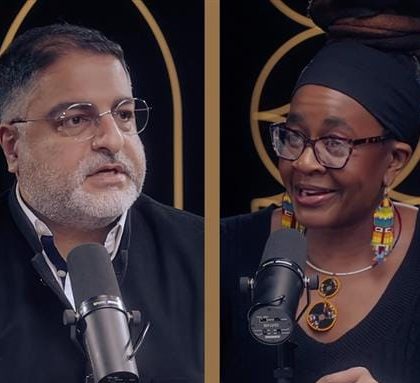
In 2000, Sanam Naraghi-Anderlini arrived in New York with a simple yet radical idea: to lobby the U.N. Security Council from the outside and ensure women were recognized as central to peace and security, not sidelined from it.
In this episode, Naraghi-Anderlini tells the inside story of how she built a global coalition of women’s groups, developed a strategy for something that had never been done before, and helped secure the adoption of U.N. Security Council Resolution 1325. More than 25 years later, she reflects on what that breakthrough changed and why the fight to fully realize its promise is far from over.
The Negotiators is a podcast from Doha Debates and Foreign Policy—and a special partner this season, the International Peace Institute.


Full Transcript
Welcome back to the Negotiators. A production of Doha Debates and Foreign Policy. Hello, I’m Femi Oke.
I’m going to start today’s episode with two concepts that should not be controversial: First, women and girls are uniquely harmed by conflict. And secondly, women should be meaningfully included in all aspects of the peace-making process.
Like I said, not controversial. Right?
But in 2000, when Sanam Naraghi-Anderlini brought these ideas to the United Nations Security Council, she disrupted the very structure of how the Security Council was supposed to work.
It all started in 1995 at a global conference for women’s equality in Beijing when women from war zones spoke about the need to protect women from gender-based violence and to allow them to meaningfully participate in peace processes and decision making. Out of that conference came the Beijing Platform for Action.
In 2000, many of those same women would be meeting again, in New York, at the Commission on the Status of Women – an annual UN gathering for gender equality.
Sanam traveled to New York and built a caucus of women civil society members – civil society is a loose term for non-governmental groups and organizations – and lobbied the security council to adopt a resolution that Sanam herself had written.
Up until that point, civil society had never successfully lobbied the Security Council. There was simply no blueprint for how to do it. But Sanam was determined to “shoot for the moon.”
Her determination began years earlier, when she was working as a journalist. Here’s Sanam.
Sanam [00:00:00] I’d watched South Africa and I read a lot about the South African process. And as an Iranian, I really wanted us to learn from that experience of going from dictatorship to democracy without going through war. I was in the CNN newsroom as an intern, and I saw the inauguration of Mandela on one screen and the genocide in Rwanda on the other screen. And it triggered something in me about how can you put a camera and watch a horror happen and not take action to prevent it? So that propelled me into the space of what can I do? How do I actually play a role in the transformation of a country? And so I… Applied for a job at International Alert, which was one of the very few organizations that was involved in conflict prevention and conflict transformation at the time and continues to be a well-known organization.
Sanam [00:00:54] I was probably 28, 29 years old and on my first day, I met a colleague, a young woman who was Rwandese, and she was a Hutu by ethnicity. But she had experienced the genocide because her family had been moderate and they had been targeted. And I just remember thinking, oh my God, I’ve lived the Iranian experience. This is on a different scale. And to have somebody kind of standing in front of me or sharing an office with someone who had had to hide and had experienced that was transformative in a very strange way. It just brought a different reality into my universe.
Sanam [00:01:52] There was a group of women that worked at Alert. I was Iranian, I had a- Costa Rican colleague, my other colleague was Guyana. I mean, so we’d all sort of converged in London. And there was a period where we realized that we as women looked at the issues differently and the experiences that we were bringing both for our own sort of historic context or family context, country context, and also in terms of how we understood the work. So for example, I was working on a project around early warning indicators for conflicts. And the idea that if we have the warnings and we warn the world, then the world will respond and prevent things. But it really wasn’t happening. And I kept going back and then trying to understand, well, who is it that responds? And my colleagues who are working in places like Burundi were saying, well, it’s the women who respond, or people were saying when Sierra Leone, the women knew that arms were being shipped, they just didn’t know where to, who to inform about the war escalating.
Sanam [00:02:54] So we converged around the question of women and war. And then in 1998, we had a conference in London and we brought women from about 50 different countries that had experienced conflict and crises at different phases or different stages. The room was incredibly packed and crowded. I remember feeling hot. And I’m very fidgety. I probably should have been diagnosed with ADD or ADHD when I was a kid. I find it very hard to sit still. But it was mesmerizing listening to the different speakers. And this one woman went on stage and I just, to this day, I remember her eyes. There was a look in her eyes which just hit me and it wasn’t an intellectual response. It was an emotional kind of visceral response. And she spoke about the importance of reconciliation and the importance of looking to the future and giving hope to those who’d survived. And this is 1998, so four years after the Rwandan genocide when 800,000 people were killed. And afterwards I was told that she had lost a hundred relatives in the genocide. I come from a large family, that my family are my roots and my touchstone and my place where I feel belonging. We were now scattered all over the world, but anywhere I go and there’s a member of the family, you know, you feel belonging, so it’s a very important part of my own identity. And I just remember thinking, I don’t know what I would do if I lost one relative, let alone anymore. And of course it was her, but it was also these others who spoke, women who’d been fighters, women who had been survivors, women who become peace actors and peace activists. And then there was this convergence amongst all of these people that led to the idea of a global campaign to elevate the visibility and the demand for attention to gender responsiveness and inclusivity in peacemaking. I remember even then thinking to myself, I am consciously choosing the most difficult thing you can possibly do because not only I’m trying to work on the idea of peace and conflict prevention, which is obvious, but is incredibly difficult because we assume war is inevitable, but to then suggest that women should be involved. I mean, we didn’t have the words for these things. Now we say women peaceholders, but we didn’t have a vocabulary then. So I knew I was doing something. Incredibly hard, but I was doing it consciously. And I sometimes think like, how crazy must I have been in my twenties? But there you go.
Sanam [00:05:41] At the end of the conference, the mandate if you want from the participants was we need to do something bigger. And then at alert with our colleagues, it was like, well, what does a campaign look like? And as part of that campaign, we targeted the security council as one of the places we wanted a policy framework. And it was in a way, it was shooting for the moon. You know, how do you get a security council resolution, frankly, but that he reared in who is a very famous peace education professor at Columbia was one of our colleagues. And she told me some years later, she said, we were at the bathroom at a conference at the Hague Appeal for Peace, which is where we launched the campaign. And she said you said to me, well, if Al Gore can go to the Security Council, so can we why shouldn’t we? And I looked at her and I said. I don’t remember that moment, but I can imagine that is exactly the kind of thing I would say because my attitude was always, well, why not? And I didn’t come into this space from having studied IR and understanding how the UN works and the protocols of who gets to go to the Security Council or not. I was like, well we’re talking about women getting involved in peace and security. You know, what’s the most preeminent entity? It’s the Security council. Let’s go.
Sanam [00:06:57] The design of the campaign was to have these partnerships with organizations around the world in war zones to consult and ask women what they wanted. So that process was going on and we were sort of moving towards the Beijing Platform for Action had been in 1995 and there was a five-year review happening at the UN and it was gonna be a big event. And we decided that, well, when we go to New York for the Beijing review, which would have been in March of 2000. We need to do the lobbying and sort of keep shooting for the security council idea.
Sanam [00:07:31] My boss at the time, so a woman called Eugenia Pizar-Lopez, sent me to New York and she said, go do this. And I arrived in New York into the community of sort of women’s organizations or women led organizations. There’s a building called the Church Center in New york. It’s opposite the UN building and it had these very, very slow elevators. But all these NGOs are. Tucked into this building on different floors. And, you know, I show up as a UK based organization, saying, Security Council resolution, you know and we want to talk about women building peace and realizing when I started sort of meeting people that, oh, there’s a bit of tension here. There’s a better, you now, so building the kind of relationships and the foundations of collegiality, if you want to build the trust to say, you know we’re here not to not to overshadow anyone, but to really. Work together to do something. And honestly, you know, my attitude was, I can’t fail. I’m mandated to come here and work on this issue and I have to get it done type of a thing. So it was a bit of hustling at various points, obviously.
Sanam [00:08:41] I was not entirely familiar with the protocol and the kind of wizard of Oz-ery that happens at the Security Council. But we knew that- there’s sort of a step-by-step process of how you get on the agenda of the council and actually how members of the Council keep issues off the agenda, right? So it’s not just this kind of one-way ticket into the council, there are headwinds. You have to go back to understanding the essence of the Security Council, right. The Security Council was a body that was created in 1945 with this idea of essentially, how do you prevent the wars of the past? You know, and the unit of analysis is the state and the state is responsible for everything and what is peace and what a security? And, you know, for them, what happens? You have two countries fighting a war. At some point, there’s an agreement to stop and side A goes back to A land and side B goes to B land, right? And that is the beginning of peace. And we were saying, no, when the war is, within your country and women’s bodies are the front lines because rape is being perpetrated as a way of destroying community. Peace is not just a political agreement or a ceasefire. I mean, it requires that initial ending of violence, but it requires so much more. And that was the issue that they were grappling with. They themselves were stuck with this, right? But we were then saying, well, the people who are- doing the peace negotiations and peacemaking mitigation are very often these civil society based women. So civil society for them was an anathema. We couldn’t mention the term. So we very deliberately focused on women because they couldn’t say no to women build peace. And I often say this to people over the years when they say, well, it should have been gender, peace and security. And I’m like, for God’s sake. The word gender would have gone nowhere. We couldn’t get the term human rights into the discussions because they would have said human rights is human rights council. The siloing and this sort of slicing and dicing of this issue is ours and this issue over there. And then at the very core of it, the resistance, is that the principle of respecting state sovereignty and non-interference in the matters of the state, in the domestic matters of this state, is a core of the UN Charter. And here we were saying, oh, but the wars are now internal. And in the process of peacemaking, we’re saying that there is internal dynamics of these peace actors that emerge. And we want the Security Council to be recognizing and enabling and creating spaces for these actors to come to the table. And for the Russians and the Chinese, these are red lines when it comes to non-interference and principles of state sovereignty. It was like having these different conversations in. Almost like in different languages, and then figuring out where we meet in the middle. And I think that those were the points of resistance.
Sanam [00:11:51] UNIFAM, the precursor to UN Women, had asked me to do a report, and it was the first publication. We had a chance to actually interview women who’d been at the peace table. I’d spent a few months interviewing about 15 women, and I think it was one man, to see how they had contributed, what difference it made being a woman, substantively to the issues being addressed, but also to their presence in the process. And I’d put this together, and the publication was called Women at the Peace Table, Making a Difference. And UNIFEM published it in early March. And they did an event where they brought some of the people I’d interviewed to speak. And we invited Ambassador Chowdhury, who was the Bangladeshi ambassador to the UN. And Bangladesh was in the Security Council at the time. He held the presidency of the Security Council in March of 2000.
Sanam [00:12:51] As you know, there are five permanent members in the security council. Then there are 10 elected members. Those 10 have a two year. Different countries take the presidency for a month. So when you’re the president of the council, you get to introduce agenda issues or you get prioritize certain topics or if you wanna bring in new issues, you have that scope. So he was invited and there was a reception afterwards. Nolene Hazer, who was the head of UNIFEM at the time, had 15 copies of Women at the Peace Table, 15 members of the Security Council. And she gave them to Ambassador Chowdhury, saying, Ambassador Chouhury this is for the Security council members, for you and others. And we really hope that we will get a statement tomorrow or something. And of course he was very gracious, but it was slightly putting him on the spot. He knew and there was a lot of background work that had been done. UNIFem had talked to him. I mean, he had been part of the… Behind the scenes advocacy and had bought into the idea of leading the charge, but he was wonderful. And I think that the reason why we have countries like Bangladesh or people like him supporting agendas like this is that they were people who had experienced crisis and conflict and they had seen what women do. For the Western countries, it was more theoretical, more slightly more performative, Whereas. For Bangladesh and then later on, Namibia and Jamaica, for them, it was a visceral understanding.
Sanam [00:14:26] So we were trying to say, okay, if we get this with Bangladesh, who’s coming up next and what can happen? Prior to Bangladesh, we’d been talking to Slovenia. Slovenia had been there and it hadn’t quite worked, like for some reason the scheduling or the timing didn’t work. And so with Ambassador Chowdhury, it kind of played into March 8th, which is International Women’s Day. In the council, his own negotiations or various negotiations with the Russians and the Americans, I mean, there’s, you know, degrees of horse trading. And he came out with a presidential statement, which was a big deal. It’s not a resolution, but it’s a step towards the resolution. So, so that was, that was a. Kind of momentum catalyst for saying, wow, okay, we’ve made it to step one. Like he’s, he’s taken the baton and he’s done it up to his point. Now, who else is coming up in the schedule for their presidencies? Let’s carry on trying to find other allies. And the other countries that we were speaking with were Jamaica, Namibia, Canada. So, you know, we go talk to the Canadians and they’re saying, we can’t, we’ve got the children in armed conflict agenda. So it’s the children who get recruited into war and so forth. We went to Jamaica. I can’t remember Jamaica. I think had already had their presidency or the timing wasn’t working. But they were saying, we support, if you get another country to take on the agenda, we will support. And then, meanwhile, we had had a good relationship with the French through our colleague at Amnesty International, her name was Florence Martin, she was French herself. So she had had sort of a good working relationship with the French mission. But the ambassador left and they had a new person and so it was kind of rebuilding that. So that slightly kind of dimmed. The US, at one point they invited me in to go speak to them about what we were trying to do. And I said, can I come with my colleagues? It mattered to me and to us that when we went, it was alert and there’s this amnesty and cake appeal, it was like a little team of us that would go in. And they said, no, we wanna talk to you. And I said, I’m not coming.
You’re listening to The Negotiators. On each episode we look at one dramatic negotiation — through the lens of one of the participants. More after the break.
BREAK!
When Bangladeshi Ambassador Chowdhury issued his “presidential statement” it opened the door for a Security Council resolution – which is what Sanam and her caucus really wanted. But Ambassador Chowdhury’s month as president was coming to an end, and they still needed to find another country on the Council to champion their cause.
That’s when Sanam raised her hand in a caucus meeting and suggested hosting events where member states could hear first-hand from women from war affected countries on why they were asking for a resolution.
Sanam [00:16:46] I was coming into the space very fresh. I didn’t come from an adversarial standpoint vis-a-vis government. So I was like, well, we need to talk to them. We invited the whole of the security council to come to the church center. It was a basement conference room, really tightly squeezed, really narrow table, I remember. And they all came, the Chinese, the Russians, they all come. The U.S. Had an ambassador to the commission on status of women. Her name was Linda Tarwailen. And afterwards she said, I’ve never been invited into the NGO space. You know, and I was like, well, why not? They’re so used to protocol and everything being formal. And in civil society spaces, we’re not, you know, we have a level of formality, but we also have a levels of openness. And so these kinds of dialogs, I think are really important.
Sanam [00:17:51] So often from the human rights framework, we prioritize all the problems that are there and all the needs that we need. You know, we need this to happen. We need justice. We need accountability, assistance in refugee camps. It becomes almost like a laundry list of things you want. And I just remember at the time thinking, well, What if we reframe it to say, hey, we’re here and we have something to contribute? Like, we can help. I would say things like, you know, the wars we’re dealing with have a new complexity. There are civil wars. The Security Council is not able to deal with them because they have to recognize state sovereignty. And what we’re telling you is that, look at these women, they’re building peace. Look, these women can help, that was an important pivot because It was a new message. It was transformative message. It’s a different thing going and saying, we want you to do this in a finger wagging, we want, we want we want. That hits in a different way to, hey, you guys have limits. We have a different comparative advantage and look at how strong these women are.
Sanam [00:18:59] So Namibia had picked up the issue of sexual violence being perpetrated or sexual abuse and exploitation being perpetuated by UN peacekeepers. There had been a huge spike in spread of HIV AIDS, UN babies, all these kinds of things. So it was, it was really a topic of discussion at the time. And Namibia chose to take it on. And they hosted in May of 2000, the Windhoek Conference, which was on specifically on peacekeeping and specifically on the question of women peacekeeping forces and all issues. They came to a civil society briefing so the NGOs would convene in the UN building at various points and the Namibian foreign minister was invited to speak to us and he came in and he was this very nice man and he thanked the civil society community and he said you know when I was a liberation fighter for Namibia I wasn’t allowed anywhere near this building I couldn’t come into the United Nations. And it was civil society that helped me and helped our country. So it was really moving to hear that. And he laughed. And I literally sprang up from my seat and went trotting down the steps and out of the conference room, kind of chasing after him. And I found him sitting in the basement of the UN where these conference rooms are. There used to be this place called the Vienna Cafe. I mean, it’s still there, but it was before they did the renovations. It was… Slightly skanky, but it was there, I had good coffee. And he was sitting there having his cup of coffee and I just went up to him and I was like, hello, excuse me, you know, I’ve just heard you. Can I talk to you about this? You’ve got the Security Council presidency and we’re trying to get this resolution.
Sanam [00:20:47] By that point, we had the report that I’d done. We’d had a conceptual framing and we as civil society based on these consultations and the different perspectives we came from, we had our draft resolution. Which we had had to negotiate a lot amongst ourselves, because when we first started, it was like, a whole page on disarmament and nuclear disarmament, a whole on human rights, a whole a page on refugee issues. And it was, like, we can’t have a 13-page resolution. So we’d negotiated between us what should be in it. And we would, when we went to talk to these government officials, we would say, and here it is, think about it. So I kind of accosted this poor man. With this message. He was very nice because he basically was like, yes, yes, of course, contact my mission. So he gets to have his coffee and peace and I get to have a contact number.
Sanam [00:21:33] So he was the foreign minister. He obviously he goes back home, but they gave us a meeting with our ambassador, this collective of ours. We went to meet him. And I think it was in the delegates lounge, or one of these areas where the officials meet. And we were a hilarious group because Imagine the space where it’s very male-dominated, because at the time most of these ambassadors and diplomats were. And in come this group of women. So there’s me, Middle Eastern looking. There’s one of my colleagues who was, I think she was of Indian origin, pregnant, heavily pregnant. Betty Reardon, elderly American professor. Felicity Hill, who was Australian. Aisha Daifan, who is Sierra Leonean. Mahamuna, who was Palestinian, literally were like the array of humanity or womanhood, whatever you want to call it, coming in so out of place compared to what they were. And we sat down to meet with the ambassador and again, you know, kind of giving him the various documents and each of us would often, you would all have our little piece of what we were to say, and essentially, you know, framing it as You know, we were really glad that Namibia has picked up the issue of peacekeeping and sexual abuse and exploitation. And could you add to it the question of women’s participation in peace process protection and conflict prevention and so forth? And it was really important because the Security Council agenda or the way peace and security was defined was very, very limited. And the Russians and the Chinese had no interest in widening these scopes. So we needed a whole… Into something that was already on the agenda of the council to be able to then widen it. And peacekeeping obviously was part of their remit.
Sanam [00:23:26] So we leave them, they’re like, yes, thank you very much. You know, we’ll think about it and so forth. And we go back. And at some point it was like, okay, we’ve got to go home now. We moved to London in July and our mode of communication was largely email and phone with our colleagues. You know why aren’t they responding? Why are they taking so long? What, you know, so you’re sitting with this. Deep kind of level of uncertainty about is it going to, and also the pace of decision-making, the protocols, I guess, of them going back to their capital and then coming back and where are we with Namibia? What about the US? Like we were, it was constantly like, is the UK with us? So we were kind of back and forth trying to figure out is anyone going to pick this up, basically. And the clock is ticking because we knew that Namibian had the presidency in October and I can’t remember who had it before. But it was like, we’ve got to get it done this year, Otherwise. The membership changes and you’re going to start all over again, right?
Sanam [00:24:18] The moment that we got the breakthrough was sometime in August of 2000. The dynamic suddenly changed because it was, it became, okay, Namibia says it’s going to do this. It’s not becoming official. They’ve taken on the baton and they reached out to UNIFEM and then UNIFM reached out back out to us to say, okay. What have you got? And where’s the, you know, what, what draft have you, so there was again, this input of what things we need to make sure stick and others that don’t. But. The sort of the momentum shifted from our space to that of it’s going into the more official structures. And so once the once we knew that this agenda was moving forward, you know, we want to have an open debate, we’re going to have to make a statement and so forth. And my boss here, Johanna was saying, well, you have to go in October, you’ll have to do the statement. And I remember drafting the statement and you know we it would be like we draft and then we people would give him part and stuff, but I was kind of the lead drafter of the civil society statement.
Sanam [00:25:16] At that point, I was back in London. I was actually pregnant, heavily pregnant with twins and I had given up on getting pregnant. I’d been married for seven years and tried various things and I was like, no, this is not gonna happen. And it was a complicated pregnancy. And in September sometime, another of my cousins, his wife, who was also pregnant with twin had traveled a lot. She had her babies prematurely. They were 900 grams and one kilo. And I remember suddenly thinking, if I travel transatlantic, five and a half months pregnant, and something happens, I will never forgive myself. And that, you know, somebody else can represent. God, even now I can talk, but, um, so I said, I won’t go. And it was a really hard decision and a really hard conversation because my boss was saying, no, but you’ve got to go. And she was saying we’ll get you a business class ticket. And my mother was saying I’ll come with you. And also just, I mean, even then I was like, imagine standing in front of the security council. Like, heavily, like, there are three of us standing in front of you, you know, that just that imagery would have been something else. But, but I just, I was just like, I just I just can’t. I’m so so Eugenia went. And she was she read the statement on our behalf. And I was in London. But it was like, oh, it passed, it happened, right?
Sanam [00:27:02] It was a high and a relief. You know, we’d been so involved in, you know, imagine you’re hiking and it’s step-by-step you’re going. And it’s almost like by the time you get to the top, it’s just one step. I don’t think I understood the significance of it at the time. And partly because we’d worked been working so hard, it was just that last step to the summit. And you’re just like, okay, I’m exhausted now. And you had me afterwards, we would talk and joke. And she’s like, we never thought we’d get this. Like, I thought you were crazy. But that’s what I’m saying. It’s like you realize it was like shooting for the moon. And sometimes I think the fact that I didn’t know how the system supposedly worked, that, oh, you don’t talk to governments. Oh, you’re don’t talks. I’m like, the fact that I was like, yeah, we want something from these folks. We need to talk to these folks and just kind of ignoring any of the supposed protocol. Was probably the most helpful thing that could have happened. So it was just kind of bypassing the way business had been done. You know, it was like business as usual just wasn’t kind of on my radar.
Sanam [00:28:12] Once the resolution was passed, we had a meeting with some of the board members of Alert to tell them. There was a, I can’t remember what her name was, but she was in the House of Lords. Very intimidating lady. And she said, okay, so now what? So what happens now? And I was like, what do you mean? Because what are you going to do now? And I wasn’t but it’s, you know, we’ve done our bit, it’s now it’s in their hands, they have to do it. And and of course, I realized very quickly that she was right that you’ve got a resolution. But just because you have it, words on paper, or even this commitment doesn’t mean that the entities that signed up to it are going to do anything about it at all, or that it’s going to be trickled down or shared within the UN system to change their practices. And even now, it’s not really systemic and systematized in the way it should be.
Sanam [00:29:09] People think it’s this Western imposition. And I’m like, no, the West really had no idea about this. And when they did engage, they kept framing it around women, the victimhood of women. I remember we were doing a training workshop for senior UN officials. There was a senior general from one of the peacekeeping operations, he’d served in Darfur. And we started talking about the question of women in Darfuran. Every day we kept hearing stories of women go out to get firewood, women are being raped. So part of the advocacy that we were doing was, can we get them gas cylinders so they don’t have to go get fire wood? Like, can we do something practical to avoid this part of problem? But this chap turned around and he said, he said yes, yes, I was there. And I said to the women, Well, why do you go? You know, don’t go to get firewood. And he said, the women looked at us and they said, if we don’t and the men go, the men get killed. So these women are making the choice of going out to find the firewood to be able to feed their kids and their families, knowing that if they go, they risk being raped. If they send the men out, the man will get killed Is that victimhood or agency? So we, you know, I get very kind of both defensive but also angry when I see this kind of bestowing of, oh, these poor women and oh, this, and I’m like, stop it. Like, put yourself in their shoes for one second and then you realize the strength, the courage, as I say, the clarity of thinking that is required for someone who’s going through. Being displaced by war or being threatened by war. So, and they know stuff.
Sanam [00:31:04] So if we as outsiders are coming in with the goal of ending a conflict or bringing peace, we should put these people front and center of everything we do. The first thing we should do is ask the women, what’s going on? What do you need? How can we help? How do we make sure we don’t do added harm to you? And 25 years later, we’re still not doing it. But it’s kind of obvious, isn’t it?
Sanam Naraghi Anderlini is the founder and CEO of the International Civil Society Action Network. UN Security Council Resolution 1325 – the resolution Sanam helped draft – was adopted on October 31, 2000. 25 years later, in late October of last year, ICAN held an event to quote – “confront unfulfilled promises and envision what a fully realized UNSCR 1325 might mean today.”
Next time on the show, the Sri Lankan civil war had already been raging for 15 years when Visaka Dharmadesa’s second son went missing in battle. That’s when she decided that someone needed to intervene. And so, she led a group of eight mothers into the jungle to meet with a leader of the Tamil Tigers.
Visaka; He started telling, okay, you are military because we are all mothers of the military, right? Your military is bombing us. I mean all, all the horrendous things that the military is doing. Then I said, yes, you are all same. You have been hacking pregnant women. And I said, that’s enough. Now let’s look forward. Let’s see how best we could stop this because it’s not going to go anywhere.
That’s next week on The Negotiators.




Our other podcasts
Doha Debates Podcast
Doha Debates Podcast brings together people with starkly different opinions for an in-depth, human conversation that tries to find common ground.

Lana
A podcast in Arabic for today’s generation to discuss their outlook on the world, hosted by Rawaa Augé.

Necessary Tomorrows
Mixing speculative fiction and documentary, leading sci-fi authors bring us three futures that seem like fantasy. We meet the writers who dream of these futures and the activists, scientists and thinkers who are turning fiction into fact.